


Sexual Health Promotion & Disease Prevention
Become a champion of your own health and well-being…
Here are a few screening tests that should be routinely practiced to detect diseases early, such as cancer.
Breast Exam-
- Performing a monthly breast self-examination is recommended for all women and men.
- Women who are ovulating should examine their breasts about one week after the onset of each menstrual period.
- Menopausal or post-menopausal women should examine their breasts on the same day every month.
- If you find a lump or anything else that is unusual, call your doctor.
- Women ages 20-39 should have a clinical breast exam every three years and every year starting at the age of 40.
- The American Cancer Society recommends that women begin having mammograms at the age of 40 and should continue through her lifetime.
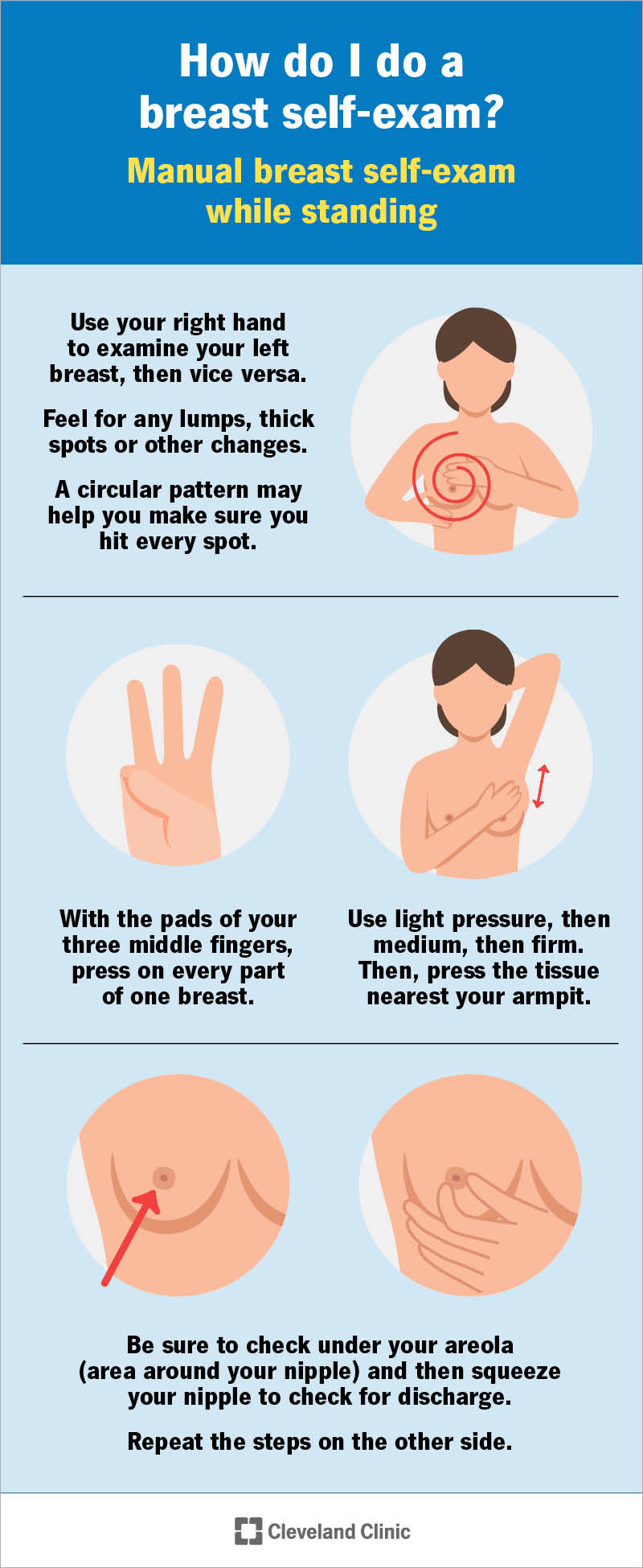
Source- Cleveland clinic

Source- I heart guts
Pelvic exam
- A routine and common physical exam healthcare providers use to check for signs of disease in your reproductive organs (i.e. STI’s, irregular bleeding, cancer).
- You should have your first pelvic exam by age 21.
- There are some instances where your provider may recommend getting a pelvic exam before age 21 (i.e. starting on birth control, symptoms of a sexually transmitted infection, pregnancy, etc.)
- You receive them every year or every few years depending on your age, health risks and other factors.
- Click here for more information
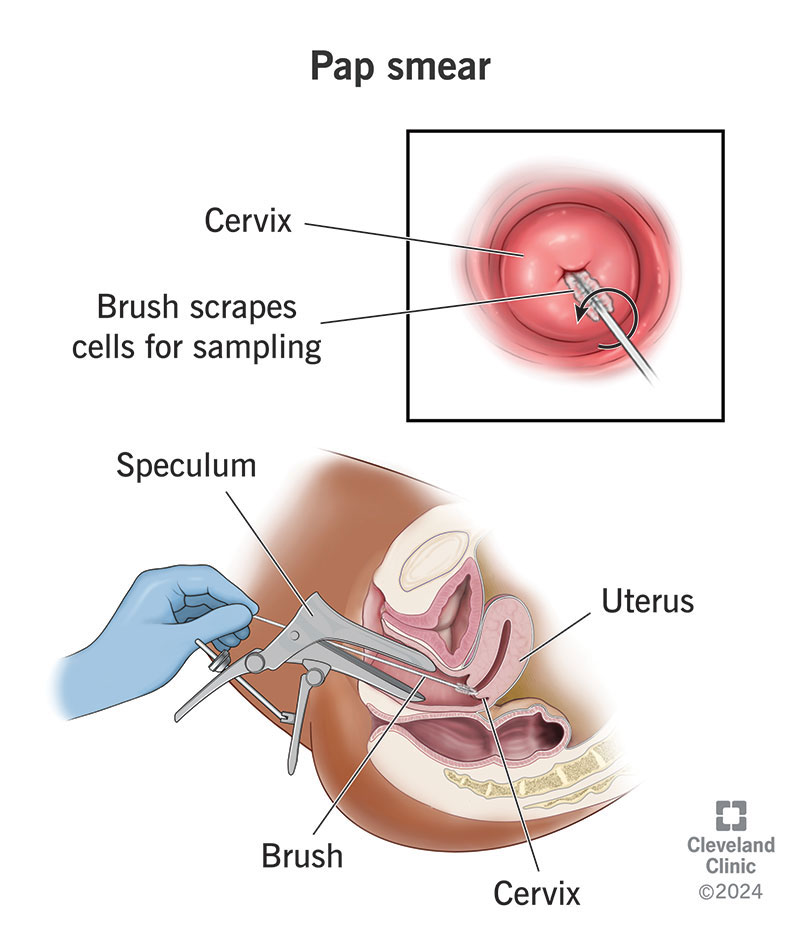
Pap Smear
Occurs during the pelvic exam, this test screens for cervical cancer.
Frequency of testing
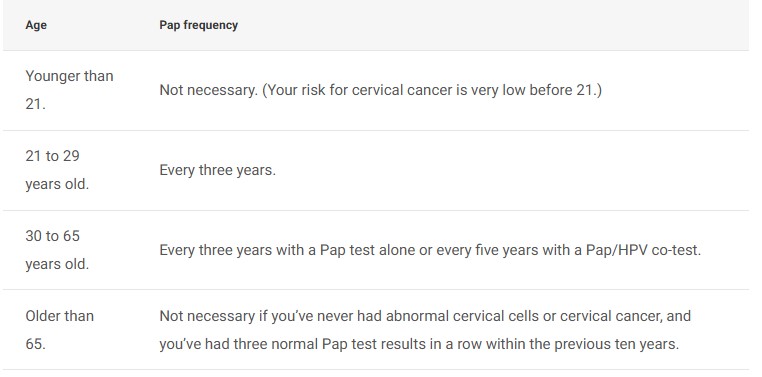
Source- Cleveland clinic. Click here for more information
Testicular exam
- Helps you become familiar with your testicles so you can easily detect changes.
- Most lumps are benign (not cancer). But talk to a healthcare provider anytime you notice changes.
- Exam your testicles at least once a month, starting around age 15.
- Click here for more information

Source- I heart guts