


Vulnerable populations & suicide clusters
Vulnerable populations
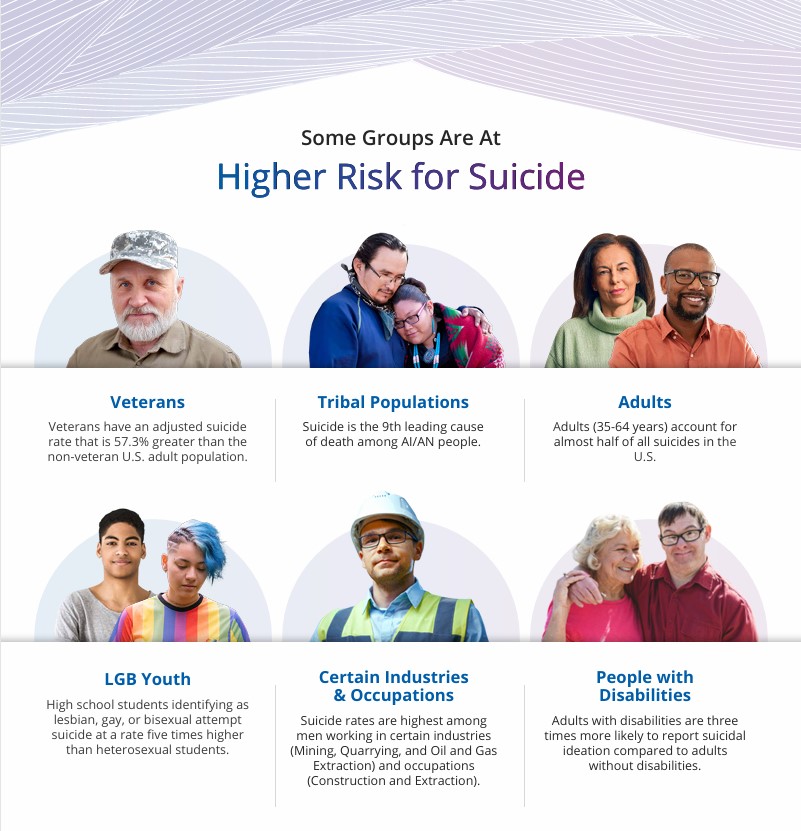
While anyone can experience suicide risk, some populations experience more negative social conditions and have higher rates of suicide or suicide attempts than the general U.S. population.
Suicide and suicidal behavior are influenced by negative conditions, also known as social determinants of health (SDOH). Some of these SDOH include:
- Racism and discrimination in our society
- Economic hardship (i.e. unemployment)
- Poverty
- Limited affordable housing
- Lack of educational opportunities
- Barriers to physical and mental healthcare access
Additional factors that can increase suicide risk include relationship problems or feeling a lack of connectedness to others, easy access to lethal means among people at risk, experiences of violence in the home and/or community. To learn more, click here (CDC).
Suicide clusters
Definition
A group of suicides or suicide attempts occur closer together in time, space, or both than would normally be expected in a community
Types
- Point clusters (or spatial-temporal clusters) represent a greater-than-expected number of suicides or suicide attempts that occur within a time period in a specific location. Point clusters might occur in a community/county or an institution such as a school, university, or psychiatric inpatient setting.
- Mass clusters (or temporal clusters) represent a greater-than-expected number of suicides or suicide attempts spread out geographically within a time period.
At-risk populations
- American Indian and Alaska Native communities
- People experiencing incarceration
- People in psychiatric inpatient facilities
- Teenagers and young adults
- Hospitals
- Military institutions
- Schools
Note- Research shows there is no one place that clusters are more likely to occur. They occur in a variety of locations and settings.
Risk factors
- Being male
- A history of substance use, self-harm, or mental illness
- Having a direct exposure by having a personal connection to the person who died by suicide
- Having an indirect exposure through media reporting or social media posts about a person who died by suicide
To learn more, click here (CDC).