


Anxiety
Definition & Causes
For a person with an anxiety disorder, the anxiety does not go away and can get worse over time. The symptoms can interfere with daily activities such as job performance, schoolwork, and relationships.
Source- NIMH
Anxiety disorders are the most common mental health concern in the United States.
- Most recent 2023 data show 13% or 1 in 8 U.S. adults regularly reported feelings of worry, nervousness, and anxiety.
- Based on US data from 2022–2023, 11% of children ages 3-17 had current, diagnosed anxiety (9% of males and 12% of females).
- Most people develop symptoms before age 21.
- Combined factors believed to cause anxiety disorders include genetics and environment. Having a family history of anxiety and/or experiencing a stressful or traumatic event has been linked to developing an anxiety disorder.
Types of anxiety disorders
There are a wide variety of anxiety disorders that differ by the objects or situations that induce them; however, all of these disorders interfere with daily activities such as job performance, school work, and relationships.
Different anxiety disorders include:
- Phobias- having extreme fear about a specific thing or situation
- Separation anxiety- being very afraid when away from loved ones
- Social anxiety- being very afraid places where there are people
- General anxiety- being very worried about the future and about bad things happening
- Panic disorder- having repeated episodes of sudden, unexpected, intense fear that come with symptoms like heart pounding, having trouble breathing, or feeling dizzy, shaky, or sweaty
- Health Anxiety- is a fear and preoccupation with the belief that one has, or is in danger of developing, a serious illness like cancer, ALS, or a heart attack.
For a complete list of anxiety disorders, refer to Resources below.
Signs, symptoms, & related conditions
Anxiety disorders are a group of related conditions, each having unique symptoms. However, all anxiety disorders have one thing in common: persistent, excessive fear or worry in situations that are not threatening. People typically experience one or more of the following symptoms:
Emotional symptoms:
- Feelings of apprehension or dread
- Feeling tense or jumpy
- Restlessness or irritability
- Anticipating the worst and being watchful for signs of danger
Physical symptoms:
- Pounding or racing heart and shortness of breath
- Sweating, tremors and twitches
- Headaches, fatigue and insomnia
- Upset stomach, frequent urination or diarrhea
For a complete list of symptoms for all anxiety disorders, refer to Resources below.
Related illnesses that can occur with anxiety:
- Adult ADHD (attention-deficit/hyperactive disorder)
- Bipolar disorder
- BDD (body dysmorphic disorder)
- Eating disorders
- Fibromyalgia
- Headaches
- Irritable bowel syndrome (IBS)
- Sleep disorders
- Stress
- Substance abuse
- Depression
Anxiety management tips
Try these when you’re feeling anxious or stressed:
- Take a time-out– Practice yoga, listen to music, meditate, get a massage, or learn relaxation techniques. Stepping back from the problem helps clear your head.
- Eat well-balanced meals– Do not skip any meals. Do keep healthful, energy-boosting snacks on hand.
- Limit alcohol and caffeine– They can aggravate anxiety and trigger panic attacks.
- Get enough sleep– When stressed, your body needs additional sleep and rest.
- Exercise daily to help you feel good and maintain your health.
- Take deep breaths– Inhale and exhale slowly.
- Count to 10 slowly- Repeat, and count to 20 if necessary.
- Do your best- Instead of aiming for perfection, which isn’t possible, be proud of however close you get.
- Accept that you cannot control everything- Put your stress in perspective: Is it really as bad as you think?
- Welcome humor– A good laugh goes a long way.
- Maintain a positive attitude- Make an effort to replace negative thoughts with positive ones.
- Get involved- Volunteer or find another way to be active in your community, which creates a support network and gives you a break from everyday stress.
- Learn what triggers your anxiety- Is it work, family, school, or something else you can identify? Write in a journal when you’re feeling stressed or anxious, and look for a pattern.
- Talk to someone– Tell friends and family you’re feeling overwhelmed, and let them know how they can help you. Talk to a physician or therapist for professional help.
For other tips, click here
Tips for parents:
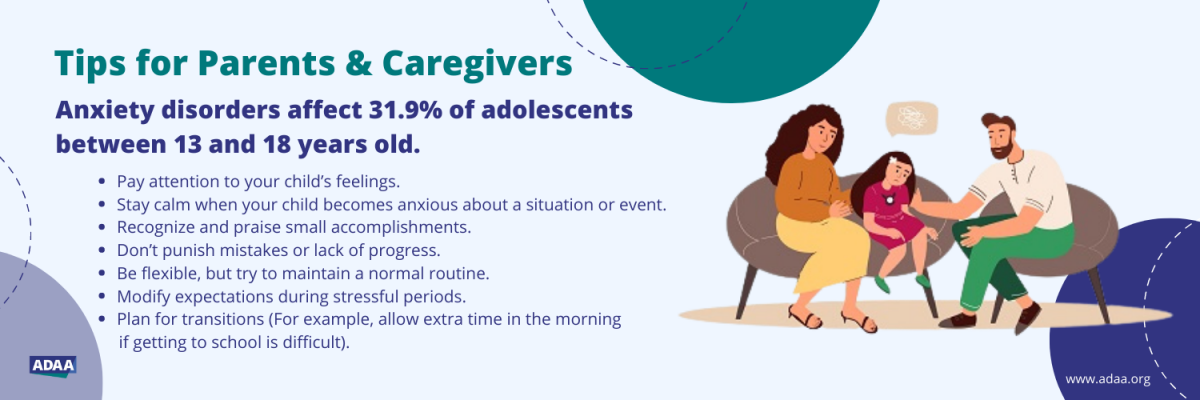
Source- ADAA