


Opioids
Terms to know
- Opioids– Are a class of natural, semi-synthetic, and synthetic drugs. They are addictive, differ in potency, and are a major driver of the drug overdose crisis in the United States.
- Natural opioids- are made from the seed pods of the opium poppy plant (aka opiates). Examples include morphine, codeine, and opium.
- Semi-synthetic opioids- are made in laboratories by chemically processing natural opioids. Examples include heroin and the prescription opioids oxycodone, hydrocodone, and oxymorphone.
- Synthetic opioids- are manufactured entirely in laboratories with no natural ingredients. An example is fentanyl, which is 50-100 times more potent than morphine.
- Opioid use disorder (OUD): A problematic pattern of opioid use that causes significant impairment or distress.
- Prescription drug misuse– means taking a medication in a manner or dose other than prescribed. Examples of misuse include:
- Taking too much, or too often, or too long.
- Using it for something it wasn’t prescribed for- to get high, to relieve tension, sleep, or be alert or study.
- Taking a medication that wasn’t prescribed to you- getting it from a family member or friend.
- Taking it in a way other than directed (such as crushing pills).
- Taking it with alcohol or other drugs.
- Fake pills– Criminal drug networks are mass-producing and marketing fake pills look just like real medications.
- Fake pills often contain fentanyl and can be deadly
- Often sold on mainstream social media sites and websites to anyone- including kids.
- Overdose– occurs when a person takes a higher drug dose than their body can handle.
- Opioids affect the brain centers that control breathing. When a person takes a high dose of an opioid, breathing can slow to life-threatening levels.
Current statistics
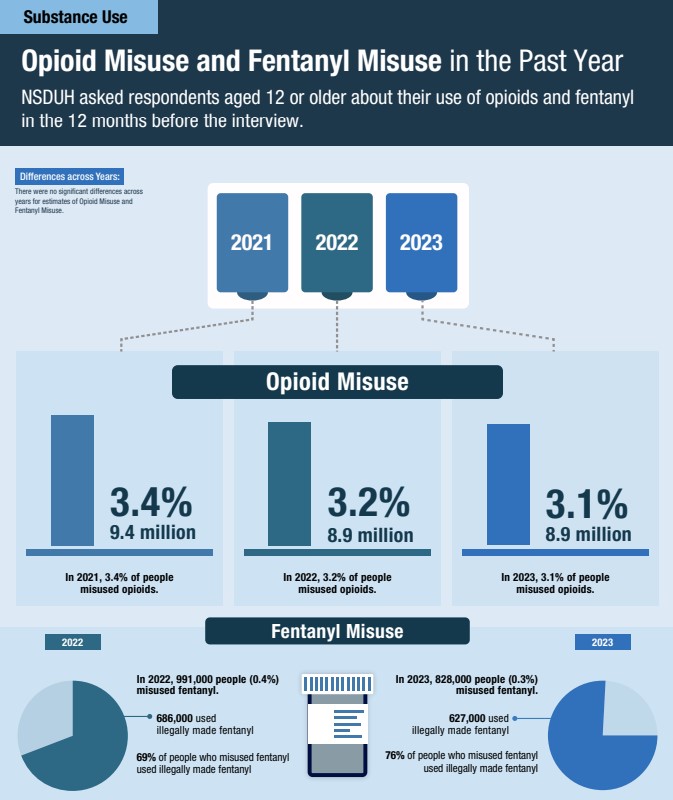
Source- 2023 Companion Infographic Report: Results from the 2021, 2022, and 2023 National Surveys on Drug Use and Health (pg. 8)
For additional statistics, click here.
Fentanyl facts
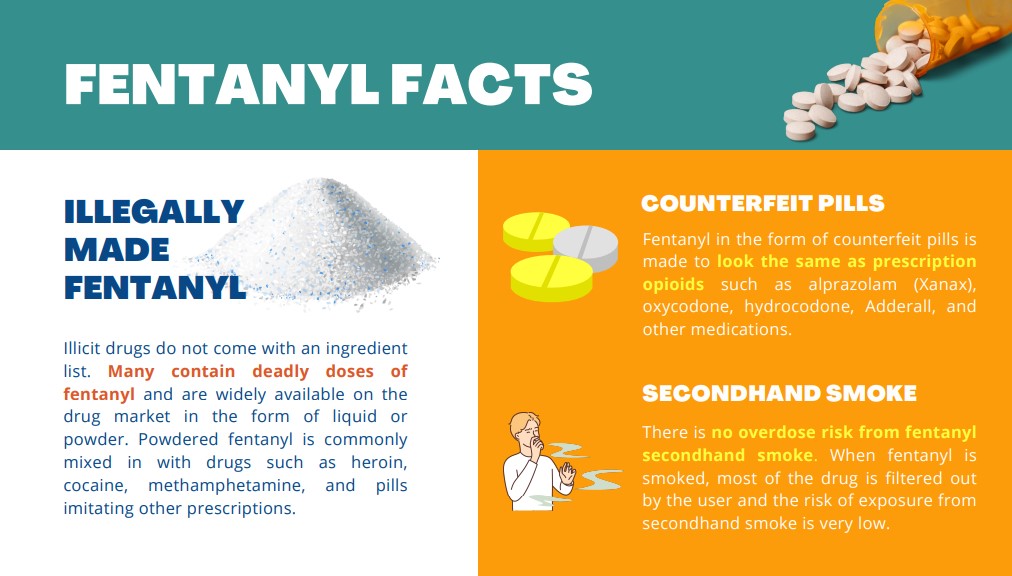
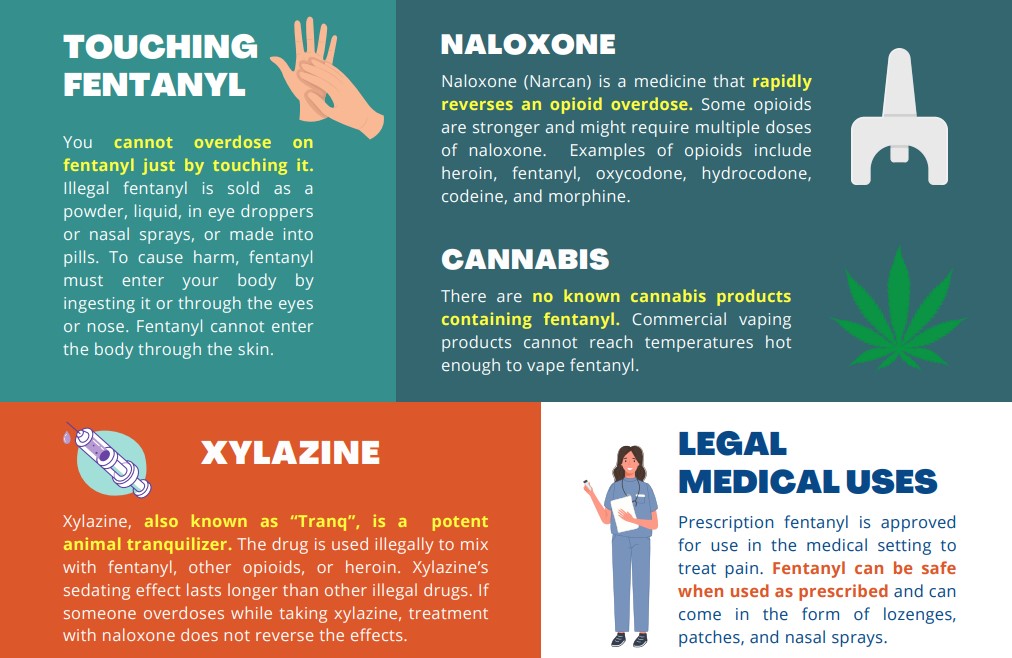
Source- EPCPH
For more Fentanyl facts, click here and here.
Health risks using opioids
Opioid use, even as prescribed by a health care provider or only for a short time, can lead to negative health effects.
- Opioids are addictive.
- High doses can lead to overdose, severe brain damage, and/or death.
- Taking opioids with other drugs raises the likelihood of harm.
- Opioids can cause unpleasant effects when taken for a long time. Symptoms include constipation, nausea and vomiting, headache, dizziness, and sleepiness or sleep problems.
- Opioids can cause cardiovascular changes, such as slower heart rate, low blood pressure, heart failure, and cardiac arrest.
- Opioids can impair the immune system, increasing risk of infection.
- Opioid use in higher doses and longer times can cause changes in a person’s body that can actually make them more sensitive to pain.
- Opioid use also has been associated with mental disorders like depression or sexual dysfunction.
- People who inject opioids are at an increased risk of diseases caused by viruses such as hepatitis C or human immunodeficiency virus (HIV).
- They also may develop bacterial infections that cause inflammation of the heart’s inner lining (endocarditis).
Source- NIDA
For information about opioids and pregnancy, click here and here.
Signs of having opioid use disorder
- Consuming the drug in larger amounts or for longer than intended.
- Persistently wanting to cut down or regulate drug use.
- Spending a great deal of time obtaining, using, or recovering from the effects of the drug.
- Experiencing a strong desire to use the drug (craving).
- Failing to fulfill major obligations at work, school, or home because of drug use.
- Continuing drug use even if it causes significant social or interpersonal problems.
- Reducing or stopping other activities because of drug use.
- Repeatedly using the drug in situations when it is unsafe.
- Continuing drug use even when knowing that it causes physical or psychological problems.
- Developing tolerance.
- Experiencing withdrawal symptoms when stopping drug use.
Source- NIDA
Signs of an overdose
Several signs can indicate that a person is experiencing an overdose and requires immediate medical attention:
- Unconsciousness or inability to wake up.
- Limp body
- Slow or shallow breathing or difficulty breathing.
- Choking or gurgling sounds
- Small, constricted “pinpoint” pupils that don’t react to light.
- Pale, blue, or cold skin
- Purple lips and fingernails
- Faint heartbeat
- Vomiting
Source- NIDA and Medline Plus
What should I do if I think someone is overdosing?
If you suspect someone is overdosing…
- Call 911.
- Use naloxone, if it is available.
- Try to keep the person awake and breathing.
For more information, click here.
Prevention- Knowledge is power
Parents and caregivers
- SAMHSA resources
- Getting Candid– conversations with youth about opioid and fentanyl use. In Spanish, click here for opioid use.