


Essential Nutrients- Carbohydrates
Essential nutrient group
Carbohydrates (CHO’s)-
- When your body digests CHO’s, your body breaks it down in to sugar and turns it into energy. Energy is needed for all body functions, including sleep, thinking, blood circulation, processing food, growing new cells, and repairing damaged cells..
- Energy is measured in calories. The number of calories you need each day depends on how much energy is needed to live and perform daily activities. This is determined by body weight, lean muscle mass, activity level, and age.
- The Dietary Reference Intake recommends that 45-60% of our calories come from CHO, especially polysaccharides.
- Too little CHO’s can cause fatigue and weight loss*
Types of CHO’s-
- Simple sugars (monosaccharides and disaccharides)
- Quickly provides energy because they are rapidly processed by the body and absorbed into the bloodstream. Good foods to use for events of short duration and requiring bursts of energy.
- Examples- Fruit, honey, candy, sports drinks, etc.
- Complex carbohydrates (polysaccharides)- aka. starches (i.e. wheat, potatoes, bread, pasta, cereal, etc.)
- They must be broken down into simple CHO’s before their energy becomes available.
Other forms of CHO’s-
- CHO consists of grains. Be aware of how much nourishment you are getting regarding the following labels:
- Whole grain– includes all parts of the grain and has the most nutritional value (vitamins, minerals, and protein).
- Enriched grain involves nutrients being added back into the product that were removed during the refining process.
- Refined grains have been milled to give grains a finer texture and improve their shelf life, but it also removes dietary fiber, iron, and many B vitamins. Some examples of refined grain products are white flour, white bread, and white rice.
- CHO consists of dietary fiber which is needed to bulk up and soften your stool (poop) to help remove waste material through your colon.
- Dietary fiber has multiple health benefits-
- Prevents heart disease, diabetes, and promotes weight loss
- Reduces/prevents colon cancer, hemorrhoids, and diverticular disease
- The optimal recommendation for fiber is 20-35 g/day
- Too much fiber can produce discomfort, flatulence (gas), and diarrhea
- Excess fiber (>50g/day) can prevent some mineral absorption
- Two types of dietary fiber-
- Soluble-
- Absorbs water and softens stool
- Binds to cholesterol and sugar which can prevent or slow down their absorption in blood
- Boost the amount of “good” bacteria in our stomach which helps our immunity, lowers inflammation, and enhances our mood
- Makes you feel full
- Insoluble-
- Adds bulk to stool and prevents constipation
- Soluble-
- Dietary fiber has multiple health benefits-
Source- Health Science Technology, 2nd edition, Chapters 9:1–9:6
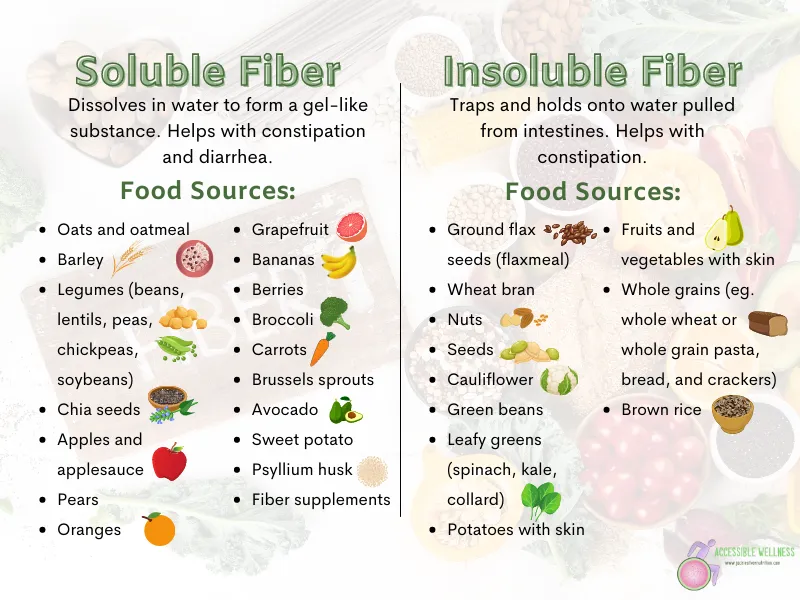
Source- Accessible Wellness
Good vs “Bad” CHO-
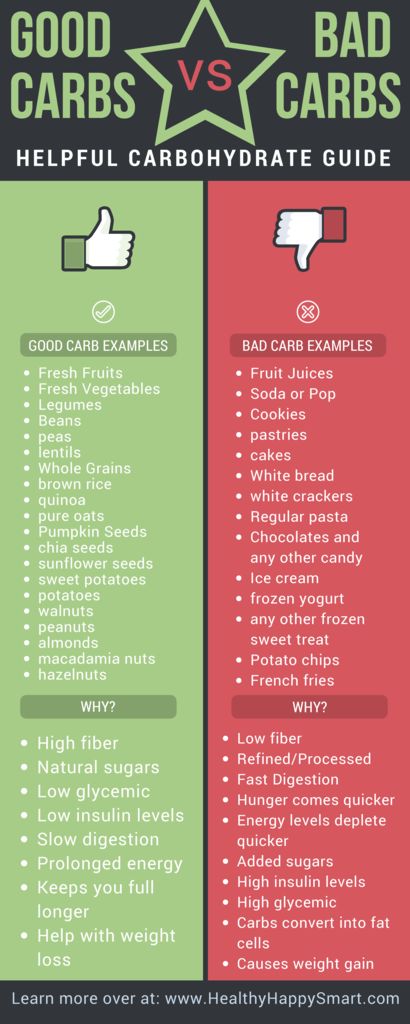
Recommended daily sugar intake-
- Limiting the amount of “added sugar” to less than or equal to 25g
- Fruit juice is to be consumed seldom (8 oz or less daily).
- Fruits do contain sugar but have much more nutrients in it that are beneficial than other sugar products.

Source- Dietary Guidelines for Americans