


Essential Nutrient- Fat/Lipids
Essential nutrient group
Fats/Lipids
- A small amount of fat in your diet is necessary to give you energy and carry fat-soluble vitamins throughout the body to produce hormones. It also helps cushion and support our organs (visceral fat).
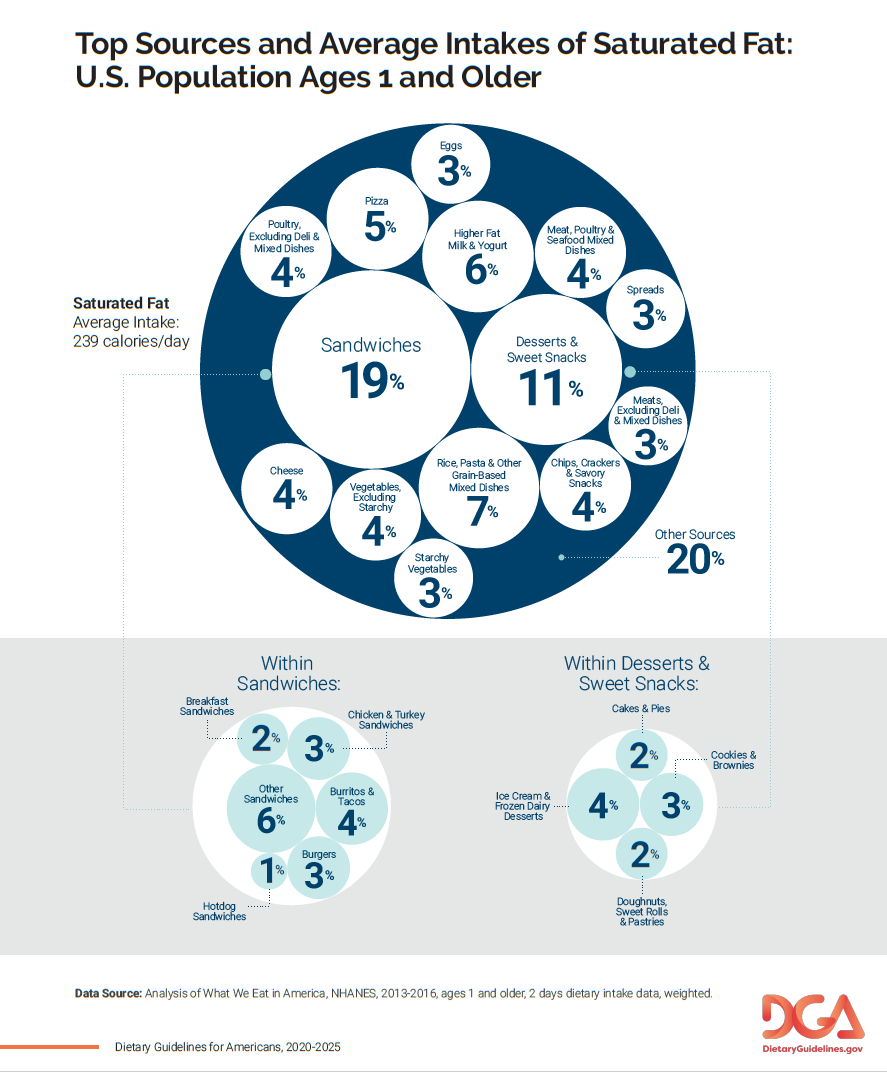
- You should not have any more than 20-35% of your caloric intake from fat and less than 10% come from saturated fat.
Types of fats-
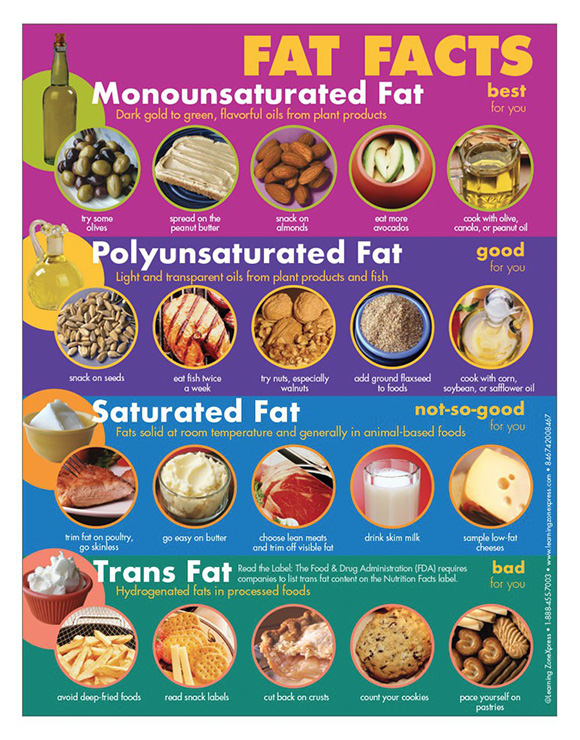
- Saturated– Found in animal fat sources like butter, cream, cheese, fat on meat, palm oil, egg yolks, whole milk products, and lard
- Tend to raise cholesterol which is linked to CAD (Coronary Artery Disease).*
- Unsaturated– Generally more healthy than other fats as they do not significantly increase cholesterol levels. There are two types:
- Monounsaturated– types of fats/oils that contribute very little to the development of heart disease.
- Examples are olive oil, peanut oil (peanut butter), canola oil, avocados, almonds, and cashew nuts
- Polyunsaturated– types of fats found in foods that usually soft and oily.
- Examples include safflower, corn, cottonseed, tofu, soybeans, and soybean oil.
- Monounsaturated– types of fats/oils that contribute very little to the development of heart disease.
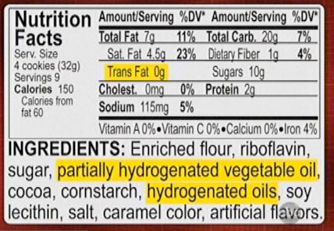
- Transfat- Found in foods eaten in restaurants, fast food, snack items, and most processed foods to increase the shelf-life. Increases LDL (bad) and lowers HDL (good) cholesterol levels.
- Tip– Read your food labels and avoid foods that are “hydrogenated” or “partially hydrogenated.”
Source- Health Science Technology, 2nd edition, Chapters 9:1–9:6 and Dietary Guidelines
Essential fatty acids- Omega 3, 6, and 9
- EFA’s fats must be consumed in the diet because the human body cannot make them.
- They enhance the elasticity of blood vessels and prevent fat buildup in arteries.
- Other health benefits include-
- •They reduce the risk of heart disease, stroke, cardiac arrest, diabetes, and Alzheimer’s disease.
- They also help with brain and eye development.
- Found in cold water fish (salmon, tuna, mackerel, flounder), nuts (almonds, cashews, macadamias, peanuts, pecans, pistachios, and walnuts), vegetables, beans, fruit, oils (canola, peanut, olive, sunflower) avocados, olives, etc.
Cholesterol-
- It is fat-like substance that helps build cells and produce certain hormones. Too much can be harmful to the circulatory system because it cannot dissolve in the blood. It just circulates in the body via proteins that carry fat.
- Cholesterol does not exist in plant foods, only animal products.
- The body manufactures about 800-1,000 mg of cholesterol daily in the liver.
- It is found in egg yolks, fatty meats, shellfish, butter, cream, cheese, whole milk, and organ meats like liver, kidneys, brains.
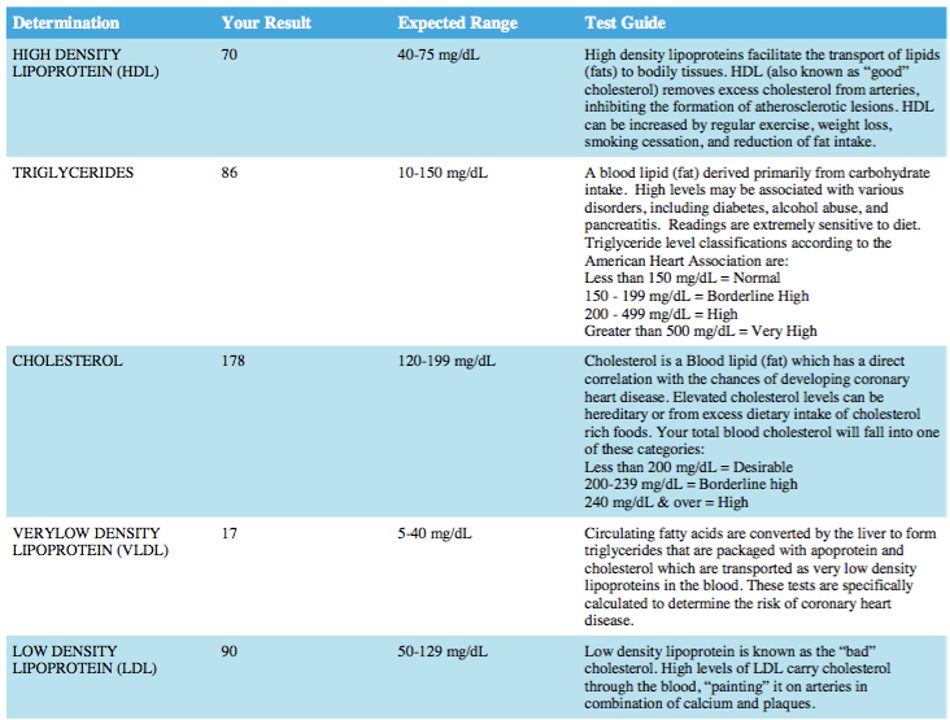
- Blood cholesterol levels should not exceed 200mg/dl.
- Daily recommendation is 300mg or less per day. One egg has 215 mg.*
- Types of cholesterol found in your body
- LDL (low density lipoprotein)- They send cholesterol to the tissues in the body and is considered “bad” cholesterol.
- Ideally should be <100mg/dl
- HDL (high density lipoprotein)- They transport cholesterol from the tissues to the liver for breakdown and is considered “good” cholesterol.
- Ideally should be >60 mg/dl
- LDL (low density lipoprotein)- They send cholesterol to the tissues in the body and is considered “bad” cholesterol.
Triglycerides-
- Type of fat the body uses to store energy and give energy to muscles.
- When you eat, your body converts any calories it doesn’t need to use right away into triglycerides. The triglycerides are stored in your fat cells. Later, hormones release triglycerides for energy between meals. If you regularly eat more calories than you burn, you may have high triglycerides (hypertriglyceridemia).
- Ideally should be < 100 mg/dl
- Like cholesterol, triglycerides cannot dissolve in the blood and just circulate in the body via proteins that carry fat.
- Having a high triglyceride level along with a high LDL cholesterol may increase your chances of having heart disease.*
Example of what a lab test may look like. Note- Reference or range levels will vary between labs.*
Risks of having high cholesterol-
- People who have atherosclerosis tend to also have hypercholesterolemia (high cholesterol levels).
- In those who have atherosclerosis, plaque is found on the inside of their arterial walls which consist of fatty deposits that contain cholesterol and other substances. This reduces space for blood flow to the heart and brain which could lead to a heart attack or stroke.*
- Things that can help lower cholesterol levels:
- Reduce the intake amount of saturated fats, increase monounsaturated fats, exercise, increase fiber, eat more Omega 3 and 9, do not smoke, & moderate sugar intake.
Source- Health Science Technology, 2nd edition, Chapters 9:1–9:6