Essential nutrients- Vitamins
Essential nutrient group
Vitamins
- Necessary in very small amounts to control a variety of body processes.
- Help the body produce energy from the foods you eat.
- Do not build muscles or provide energy.
- Can help cure some diseases that are caused by vitamin deficiencies, but do not cure or prevent every disease.
- Reference Daily Intakes (RDI) is the levels of a vitamin or mineral recommended to be included in the diet each day.
- There is no need to take mega-doses (doses larger than recommended) of vitamins as it can become toxic pertaining to some vitamins.*
- Most vitamin requirements can be met by following a healthy diet; however sometimes a vitamin supplement is needed to fill the gaps of the nutrients missing in your diet.
- Two categories of vitamins-
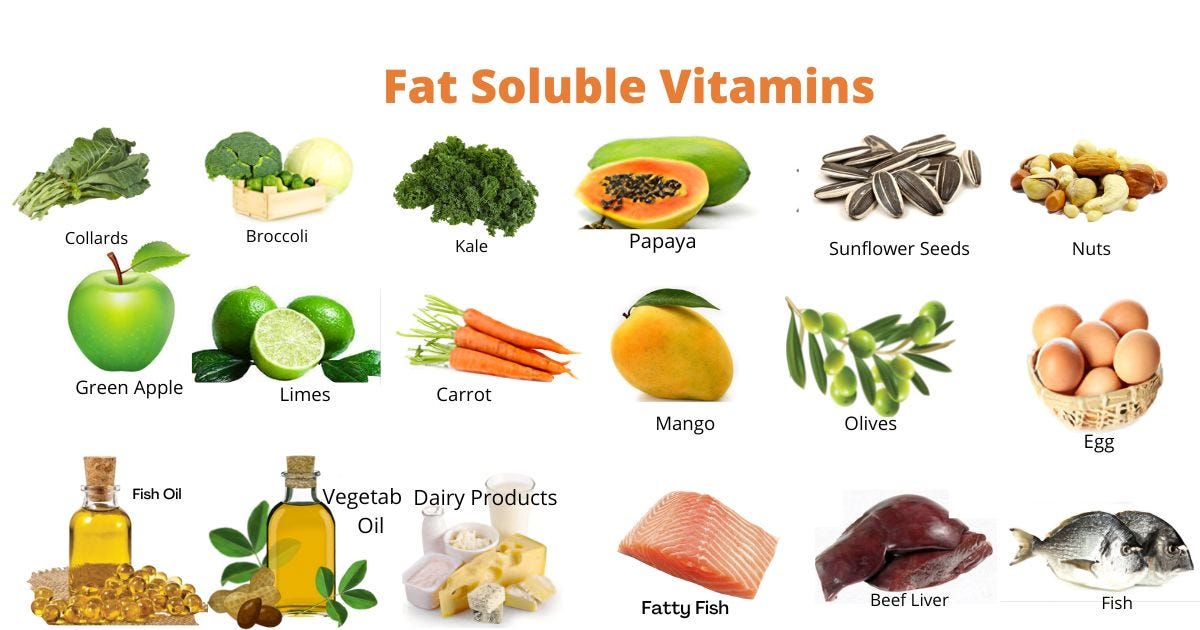
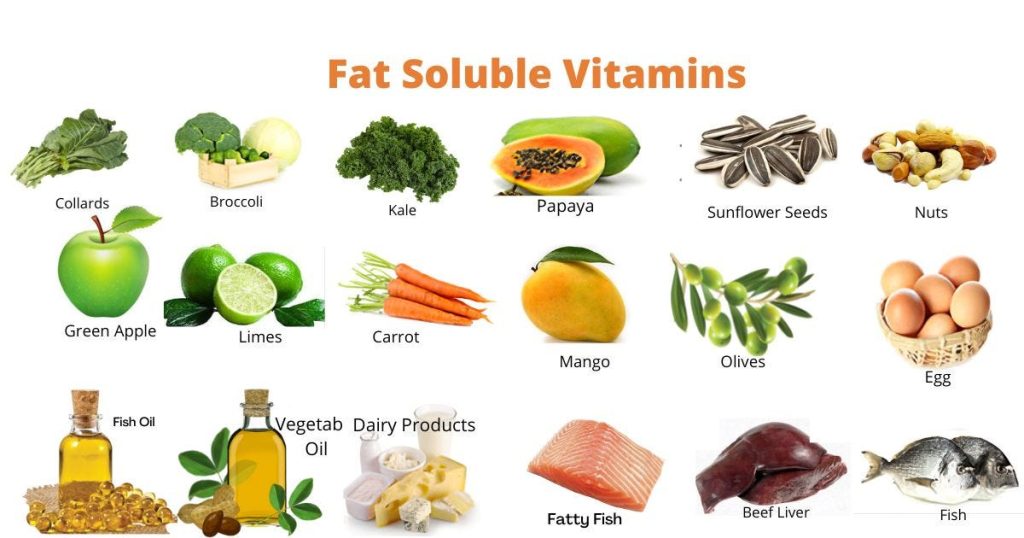
- Fat soluble- i.e. Vitamin A, D, E, and K
- Absorbed in the small intestine
- When consumed, they are transported through the body by fats/lipids in the bloodstream. Excess amounts are stored in the liver and used later.
- They are not lost in cooking like water soluble vitamins
- Mega-doses should be avoided as they can reach toxic levels quicker than water soluble vitamins as they are stored in the body.
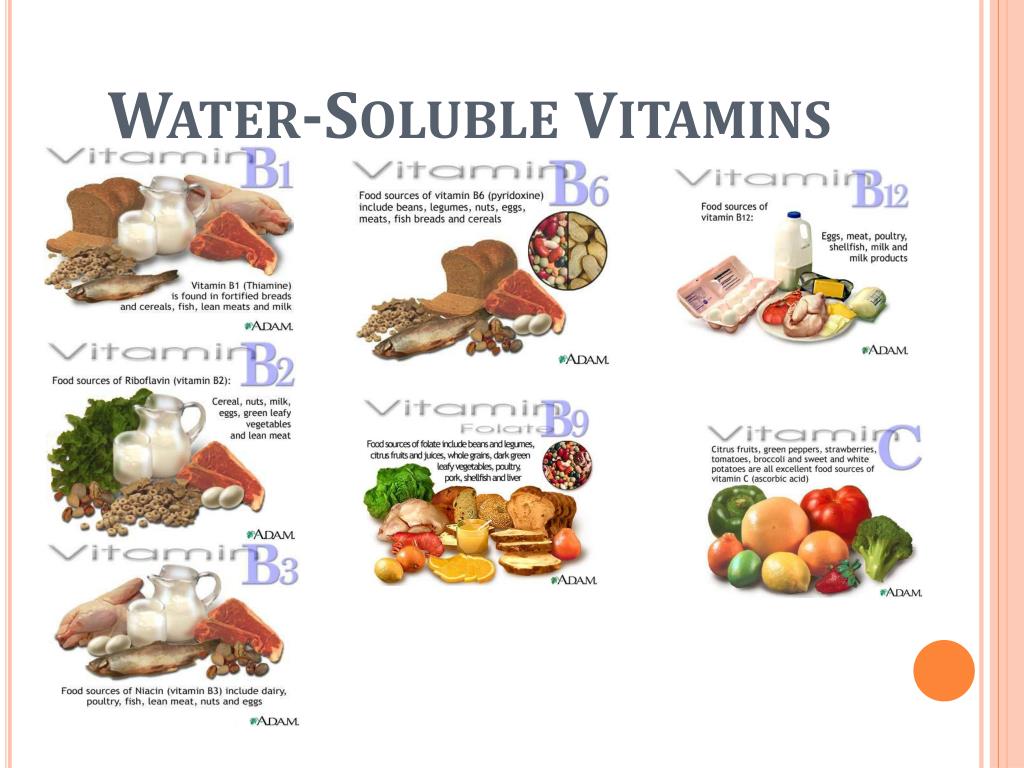
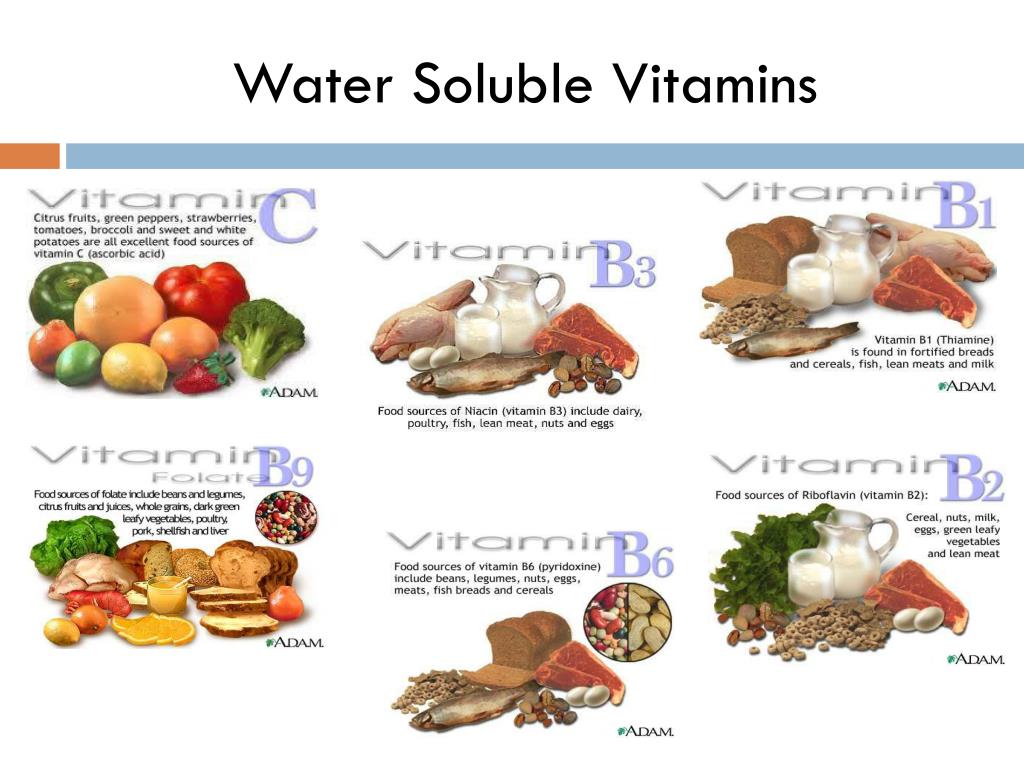
- Water soluble- i.e. variety of B vitamins and Vitamin C
- Absorbed in the small intestine
- Easily destroyed by air, light, and cooking, so proper storage is important.
- Most of them are not stored in the body so frequent intake of water soluble vitamins are necessary
- Fat soluble- i.e. Vitamin A, D, E, and K
Water Soluble vitamins-
Vitamin C-
- Functions-
- Has antioxidant effects (interferes with damaging effects of free radicals in the body)
- Lowers LDL’s
- Helps with iron absorption and metabolism
- Produces collagen (holds body cells together)
- Is a natural antihistamine
- Deficiency symptoms-
- Tissue bleeding like gums
- Poor wound healing and bruising
- Sore joints and muscles, and bruising.
- Food Sources: Citrus fruits, peppers
Thiamine (Vitamin B1)
- Functions:
- Essential for metabolism of CHO and protein
- Assists with nerve and muscle action
- Source of energy for the GI and cardiovascular system
- Deficiency symptoms:
- Poor appetite, indigestion, constipation, decrease in alertness, fatigue, irritability, pain, and paralysis of legs and arms
- Food Sources: Wheat germ, lean pork, beef, liver, whole or enriched grains, and legumes.
Vitamin B2 (Riboflavin)-
- Functions:
- Essential for CHO, fat, and protein breakdown
- Maintains skin, eyes, and mouth tissue
- Deficiency symptoms:
- Sores on lips and corners of mouth
- Inflammation of tongue and skin
- Eye itching and burning
- Fatigue
- Food Sources: Milk, meats, poultry, fish, and enriched breads and cereals.
- Riboflavin is the cause of your urine turning neon yellow after taking a B-complex vitamin.*
Niacin (Vitamin B3) –
- Functions:
- Essential to every body cell for energy
- Sometimes used to lower cholesterol
- Deficiency symptoms:
- Inflammation of and sores on the skin
- Diarrhea
- Anxiety, irritability
- Confusion, poor memory, dizziness, and maybe death
- Toxicity Symptoms:
- Reddened flush of skin (erythema), burning, itching, and tingling. Usually occurs in those taking Niacin for high cholesterol.
- Food Sources: Meats, poultry, fish
Folate/Folic Acid-
- Functions:
- DNA synthesis, protein metabolism, and Hemoglobin formation.
- Helps prevent colon, cervical, esophageal, stomach, and pancreatic cancers.
- Helps prevent strokes, macular degeneration, Alzheimer’s disease, and birth defects (spina bifida and anencephaly (absence of brain).*
- Deficiency symptoms:
- anemia
- fatigue
- gray hair
- mouth sores
- tongue swelling
- growth problems
- peripheral neuropathy (the result of damage to one or more groups of nerves)
- Food Sources: Green leafy vegetables, OJ, dried beans, chicken liver
Biotin–
- Functions:
- Helps make fatty acids and amino acids
- Improves the keratin infrastructure (Keratin-protein that makes up hair, skin, nails)
- Food Sources: Liver, cooked egg yolk, soy flour, cereals, yeast, tomatoes, meats
Source- Adam Health and Health Science Technology, 2nd edition, Chapters 9:1–9:6
Fat Soluble Vitamins
Vitamin A-
- Functions:
- Important role in vision, bone growth, reproduction, and cell division
- Regulates immune system which helps fight infections
- Deficiency symptoms:
- Itching, burning, inflamed, and red eyelids
- Blindness
- Food Sources: Fruits, veggies, beef and chicken liver, milk, ricotta cheese
Calciferol– Vitamin D2 and D3
- Functions:
- Promotion of calcium and phosphorus absorption in the body which allows for normal bone and teeth development.
- New research has shown it helps with immunity.
- Deficiency symptoms:
- Poor bone and teeth formation
- Brittle, porous bones
- Food Sources: Sunlight! Milk, fish liver oils, egg yolk, butter, fortified margarine.
Vitamin E-
- Functions:
- Antioxidant- helped by Vitamin C and Selenium (mineral).
- Can enhance the immune system.
- Helps against cataracts and glaucoma.
- Deficiency symptoms:
- Muscle weakness
- Peripheral neuropathy
- Coordination and walking difficulties
- Vision deterioration
- Immune system problems
- Toxicity Symptoms: Not common
- Bleeding, muscle weakness, fatigue, nausea, and diarrhea
- Food Sources: Vegetable oils, nuts, fortified cereals, avocados
Vitamin K-
- Functions: Blood clotting and bone development
- Deficiency symptoms: Excessive bleeding, bruises easily, has black, tarry or bright red stools (poop)
- Toxicity Symptoms: Anemia
- Food Sources: Green leafy vegetables, broccoli, cabbage, turnip greens, spinach, and kale
- Babies are given an injection of Vitamin K at birth as they are born with low levels. Usually not an issue but given as a prophylactic.
Source- Medium and and Health Science Technology, 2nd edition, Chapters 9:1–9:6