


Essential nutrients- Minerals
Essential nutrient group
Minerals
- Are elements found in the earth.
- We cannot make them but we need them in small amounts.
- Recommended daily intakes vary according to age and gender.
- Note- There are various types of minerals; however, I am addressing only the three major minerals noted below. Please refer to the references below to learn more about other minerals.
Calcium-
- Functions:
- Bone and tooth formation
- Blood clotting
- Needed for muscle and nerve action
- Assists with metabolic reactions (i.e. permeability of cells to nutrients, intestinal absorption of B12)
- Deficiency symptoms:
- Fatigue
- Poor oral health
- Muscle pain and spasms
- Memory issues and dizziness
- Numbness and tingling in your fingers
- Abnormal heart rhythm (i.e. feel heart skipping beats)
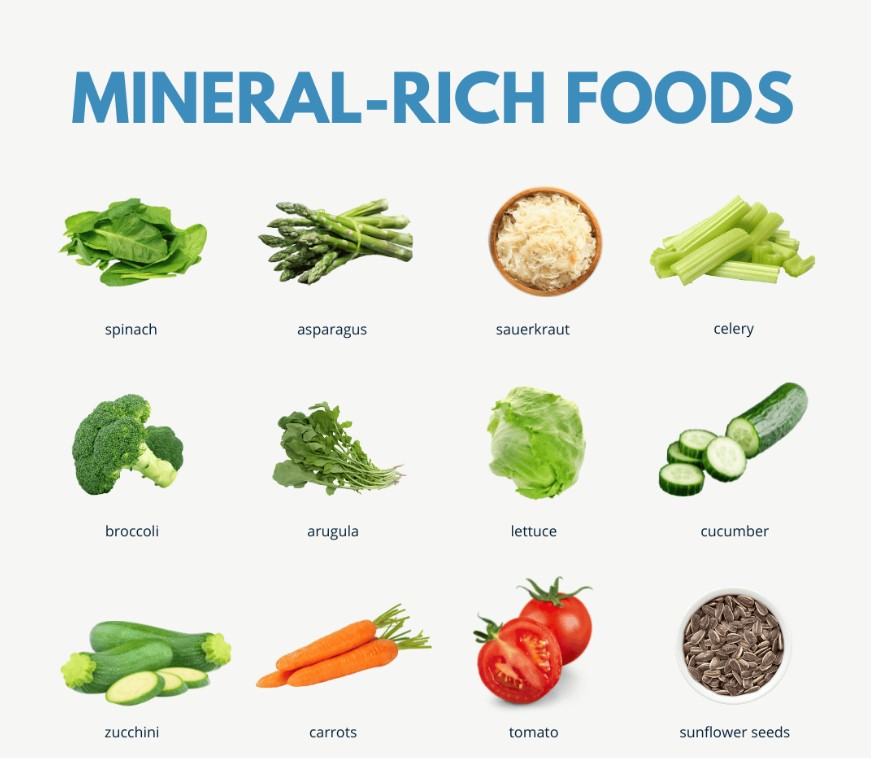
- Food Sources: Milk and milk products, calcium fortified products, green leafy vegetables (i.e. bok choy, broccoli, collard greens, kale, and turnip greens)
Potassium-
- Functions:
- Works with sodium to maintain water balance
- Helps convert blood glucose into stored glycogen
- Plays a role in nerve impulse transmission to stimulate muscle action.
- Helps the beta cells release insulin.
- Helps keep blood pressure stable as long as sodium and potassium intake are similar.
- Deficiency symptoms: Can be caused by diarrhea, vomiting, diuretics, surgery, or malnutrition. Could lead to cardiac arrest*, breathing difficulties, bloating and muscle weakness. Deficiency symptoms include:
- Constipation
- Heart palpitations/arrhythmias (feeling your heart beat in your chest and/or skip a beat)
- Extreme tiredness/fatigue
- Muscle weakness, spasms, and cramps
- Tingling and numbness of your fingers
- Lightheadedness or faintness
- Food Sources: Oranges, bananas, broccoli, leafy greens, prunes, potatoes.
- Which has the most potassium?
- Sweet Potato
- Regular Potato
- Banana
- Prune
- Plain low-fat yogurt
- Answer- Banana-422mg. Sweet Potato-542mg. Baked potato- 926mg. Prunes-637mg. Yogurt/plain/low fat 573mg.
- Which has the most potassium?
Sodium-
- Functions:
- Works with potassium to maintain water balance
- Helps muscle action
- Helps with glucose get to cells
- Deficiency symptoms: Can occur with dehydration
- Nausea and vomiting
- Headache
- Confusion
- Loss of energy, drowsiness and fatigue
- Restlessness and irritability
- Muscle weakness, spasms or cramps
- Seizures
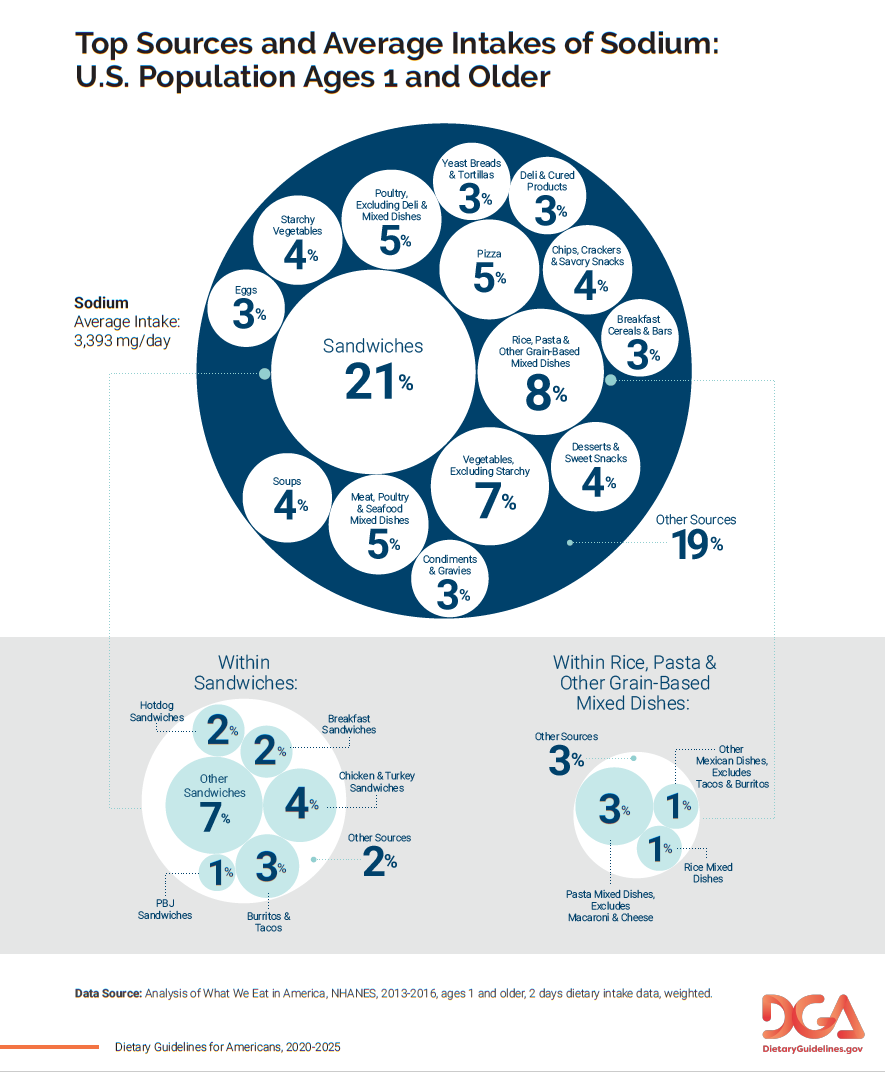
- Food Sources: Common table salt, animal products, processed foods- Read labels!
- 5-ounce frozen turkey and gravy dinner have 787 milligrams of sodium
- Raisin bran can have up to 250 milligrams of sodium per cup
- Cup of canned cream-style soup= 730 milligrams of sodium
- Beef or pork dry salami (2 slices)= 362 milligrams of sodium
- Cup of chicken noodle soup (canned)= 744 milligrams of sodium
- Teriyaki sauce (1 tablespoon)= 690 milligrams of sodium
- Soy sauce (1 tablespoon)= 1,024 milligrams of sodium
- Even “lower-sodium” soy sauce can have a lot of sodium, so use sparingly
- Recommendations for sodium daily intake-
- Less than 2,300mg/day
- 1,500mg/day if you are age 51 or older, Black, or have high blood pressure, diabetes or chronic kidney disease.
- Tips to lower your sodium intake-
- Rinse canned vegetables thoroughly
- Buy canned or frozen food labeled “no salt added” or “low/reduced sodium.”
- Use vinegar and lemon juice to enhance flavor instead of salt or soy sauce
- Try orange or pineapple juice as a base for meat marinades
- Eat “puffed” cereals which are sodium free
Source- Health Science Technology, 2nd edition, Chapters 9:1–9:6
Source- Dietary Guidelines
Source- Optimising Nutrition
