My Plate, portion/serving sizes, and caloric intake
My Plate (formerly known as the Food Pyramid)
The concept-
- Reflects the USDA Dietary Guidelines for Americans (2020-2025)
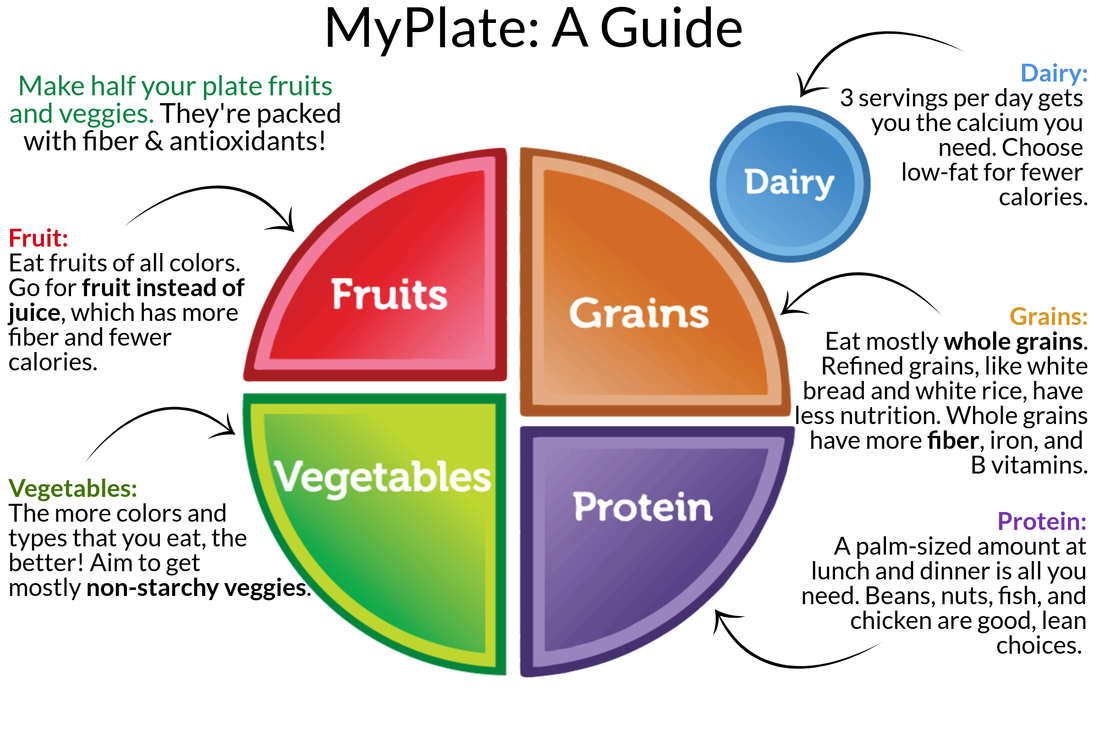
- Encourages eating nutrient dense foods which contain numerous vitamins, minerals, proteins, and fiber.
- Considers sodas, alcohol, and candy as “empty calorie” foods which contain calories and has no nutritional value.
- Guidelines-
- Half of your plate should be composed of fruits and vegetables.
- Another 25% should be grains (preferably whole grains)
- The other 25% should make up protein.
- Regarding dairy, My Plate encourages milk products instead of sugary drinks at meals.
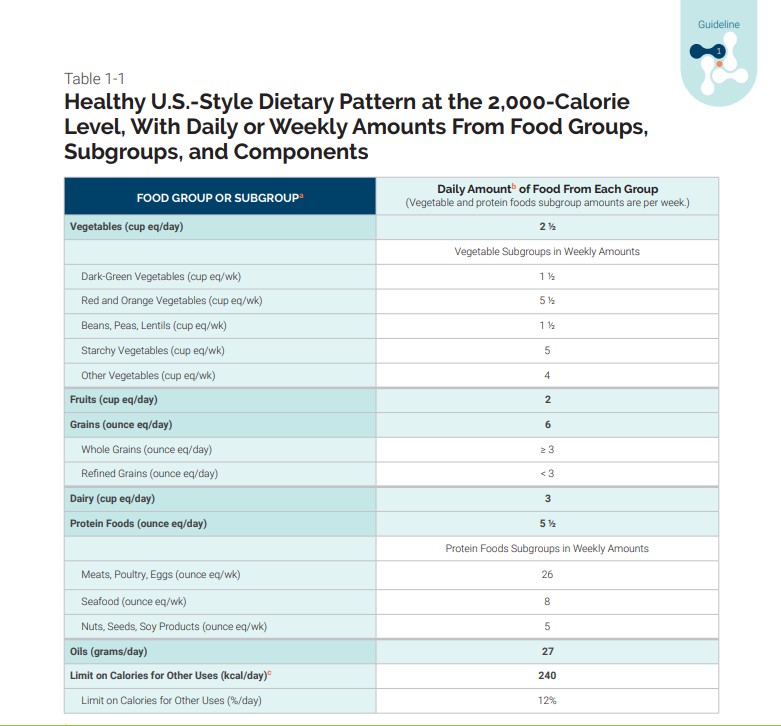
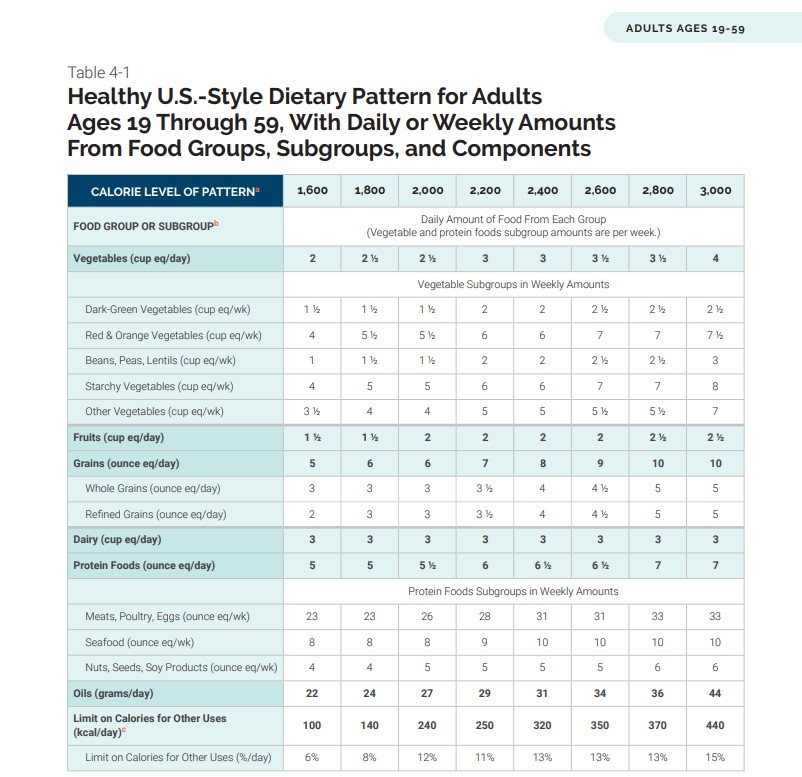
- Oils are considered fat and should be used sparingly. Refer to chart below for daily allowance based on age and activity level.
- Some foods can fall under more than one category.
- Beans and peas (i.e. kidney beans, pinto beans, black beans, lima beans, black-eyed peas, garbanzo beans (chickpeas), split peas, lentils) provide many vitamins, minerals and fiber like vegetables, but are also high in protein.

- To determine your caloric allowance based on your age, sex, height, weight, and physical activity level, click here.
- To determine if the types of foods you are eating are nutritious, take the quiz.
Source- My Plate
Portion and serving sizes
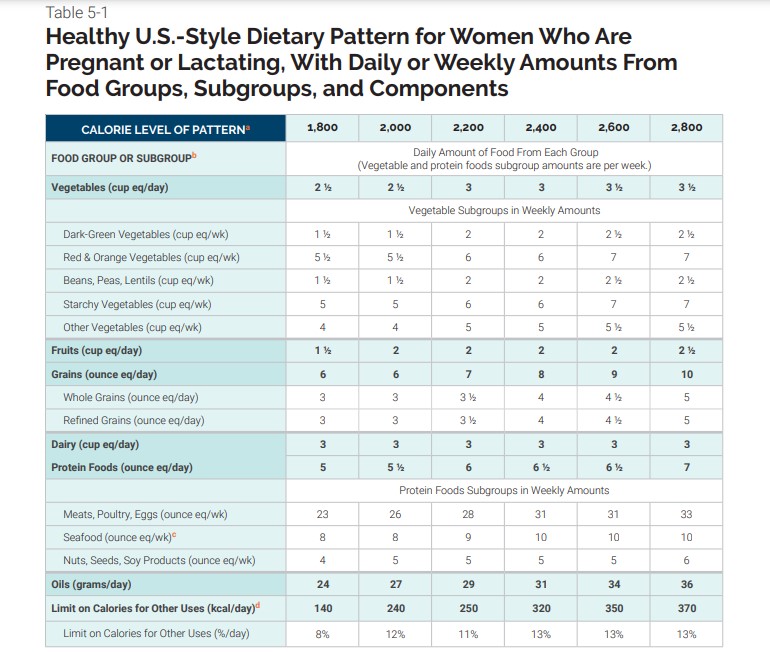
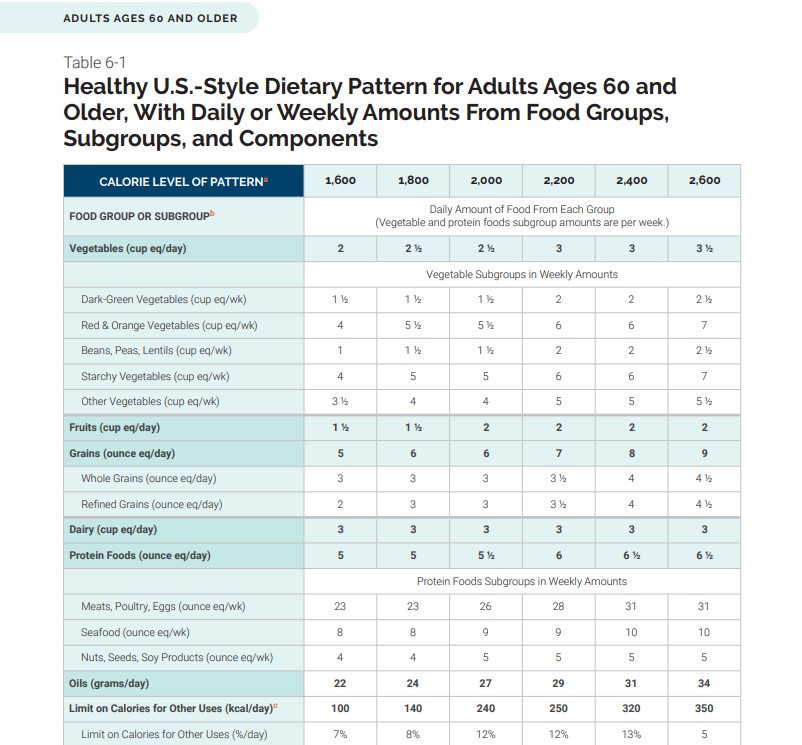
My Plate 2025 recommendations-
Adulthood (ages 19-59)
Infancy to adolescence (birth to 18 years)
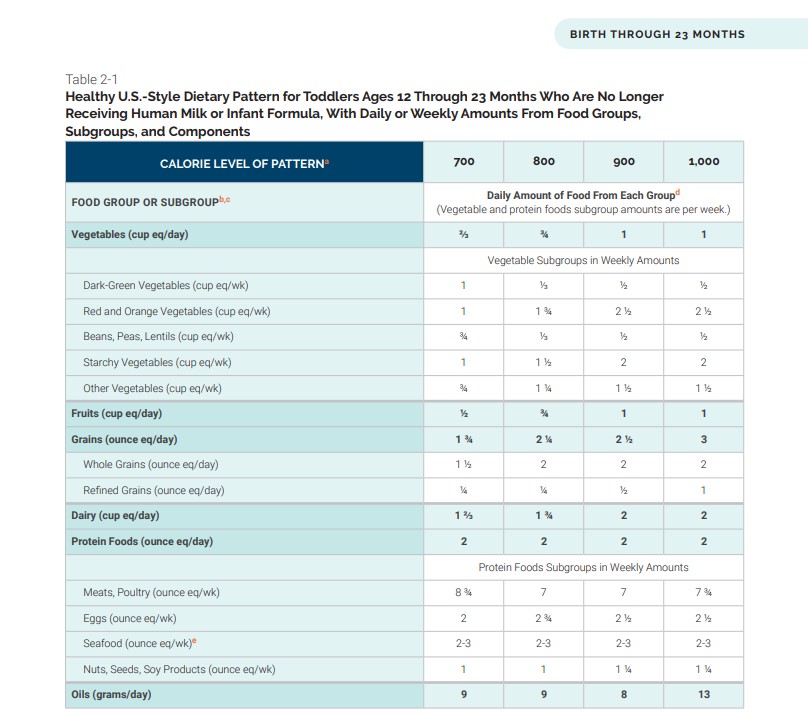
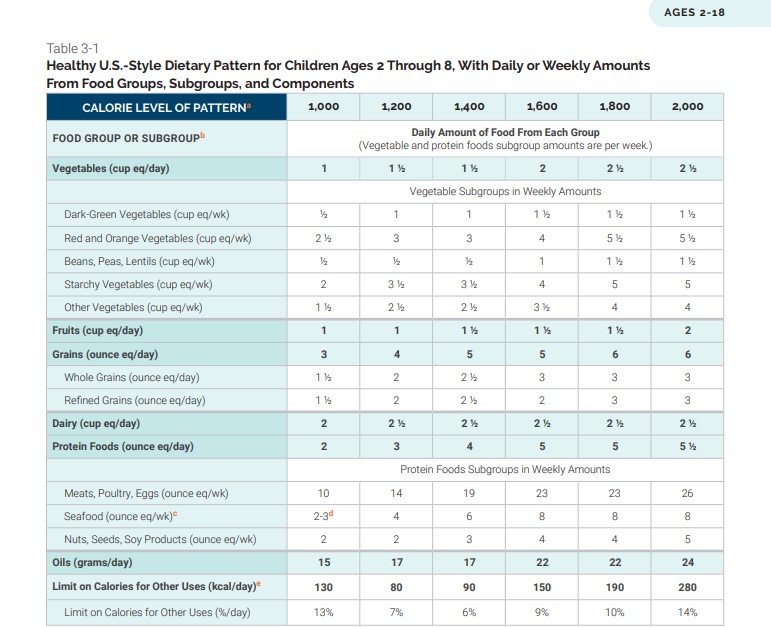
Pregnant Women and Elderly (60+ years)
Special diets- Vegetarian and Mediterranean
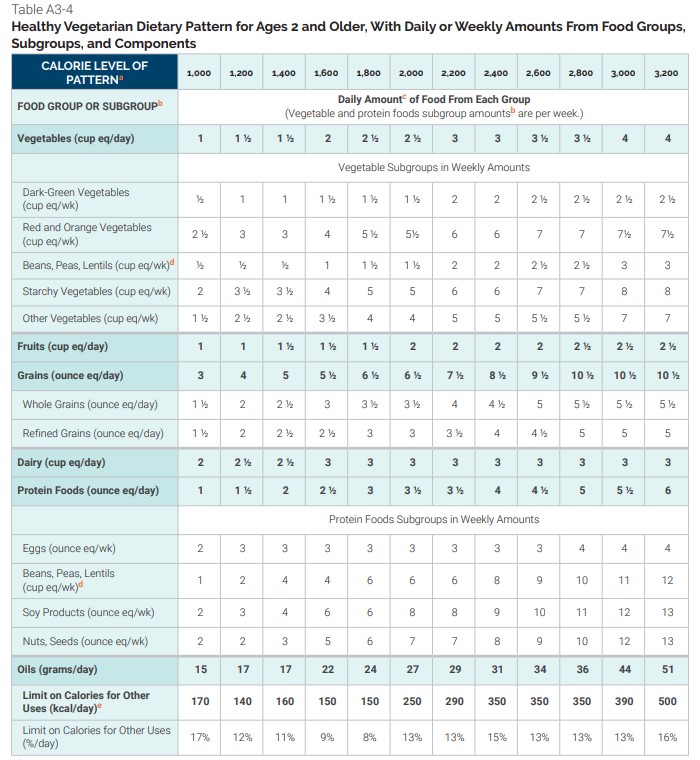

Source- My Plate
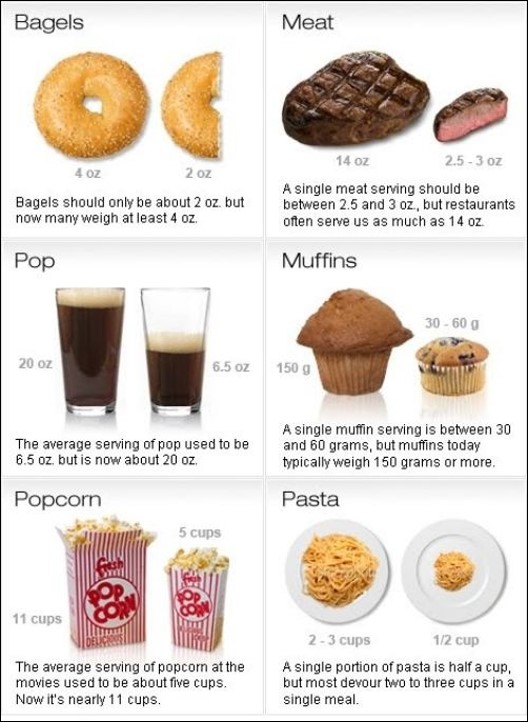
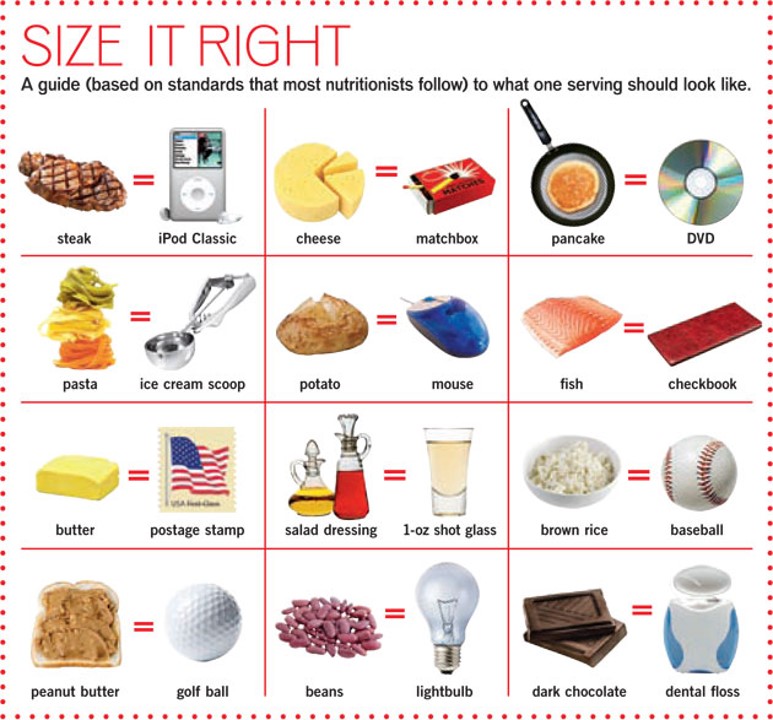
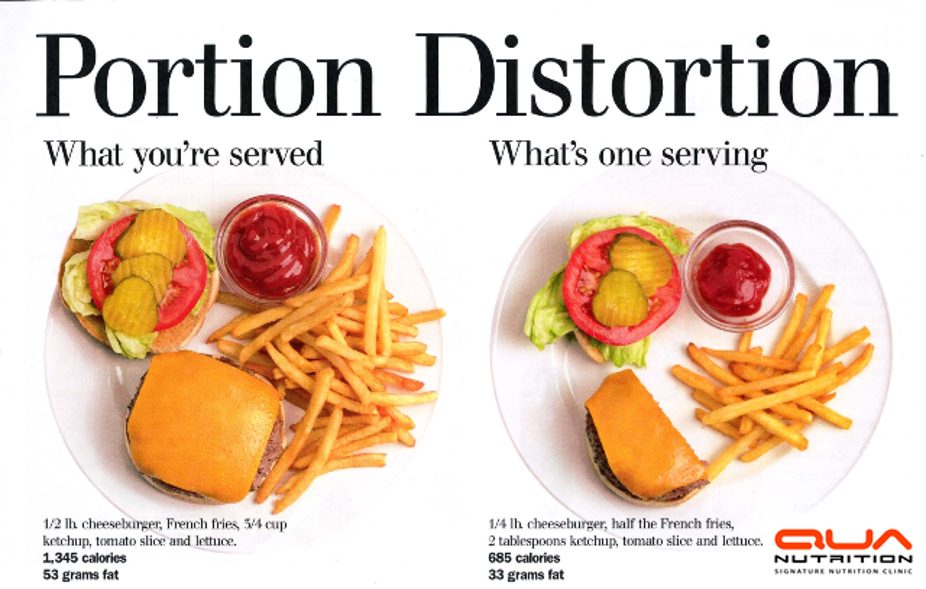
Understanding portion sizes-
Calorie Allowance
My Plate 2025 recommendations:

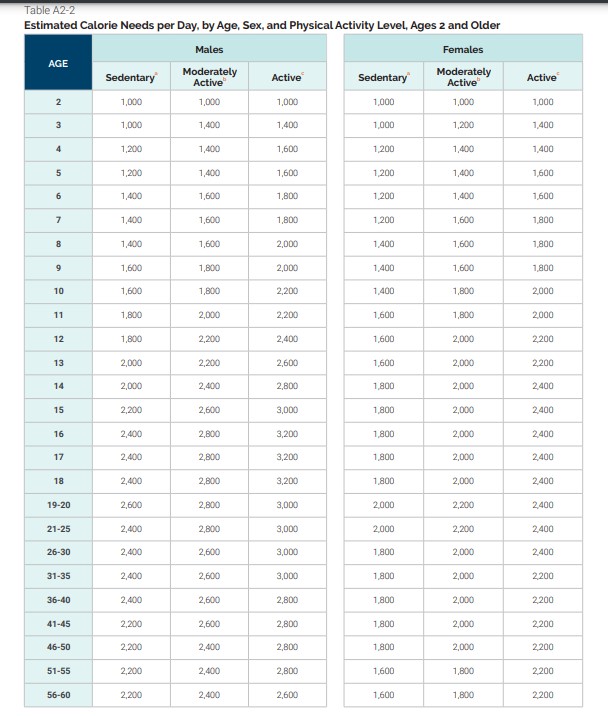
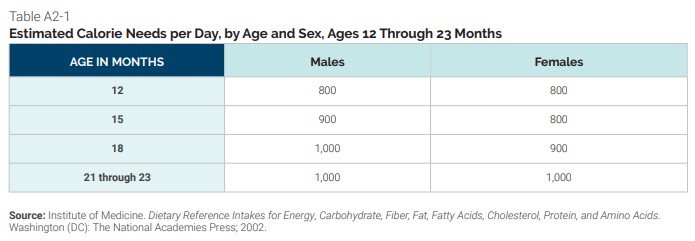
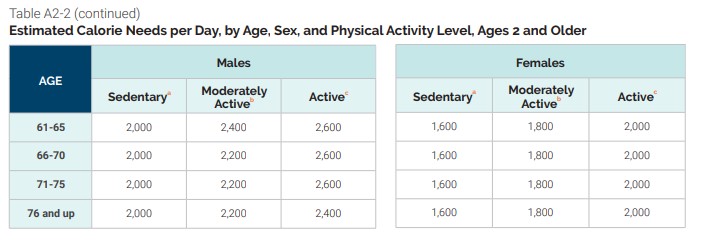
Source- My Plate and Dietary Guidelines
To calculate your daily calorie intake based on gender, age, weight, and activity level, click here.
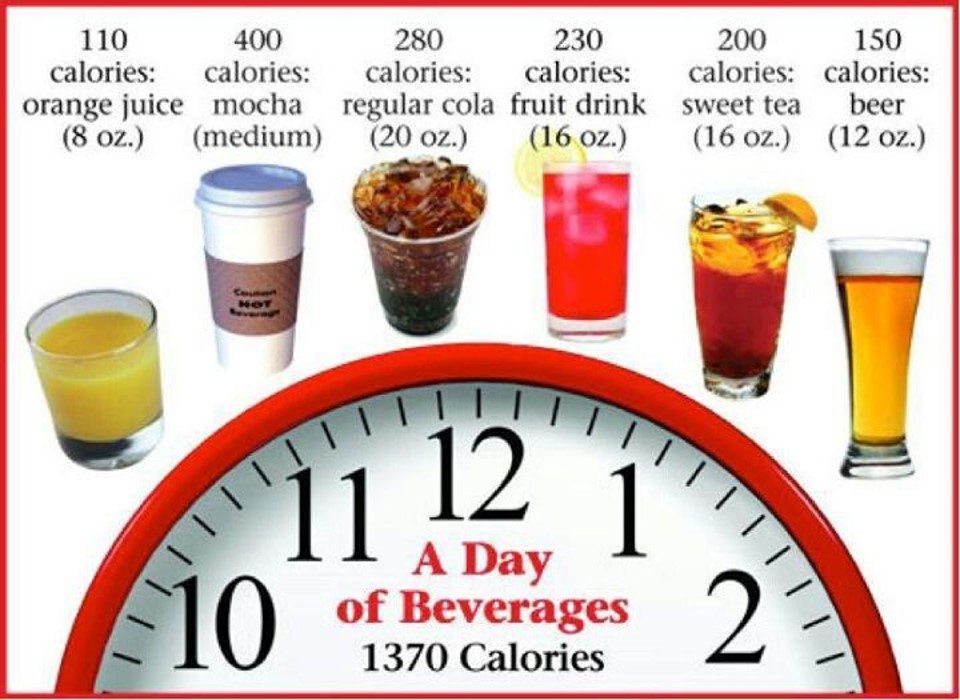
Food for thought- Be aware your caloric intake can be consumed from just the beverages you drink daily*