


Alcohol
Terms to know
- Alcohol use disorder (AUD)– a medical condition characterized by an impaired ability to stop or control alcohol use, despite adverse social, occupational, or health consequences. It is a spectrum disorder and can be mild, moderate, or severe.
- Blood Alcohol Concentration (BAC) – Percentage of ethyl alcohol present in the bloodstream after consuming alcoholic beverages.
- Binge drinking– a pattern of drinking alcohol that brings blood alcohol concentration (BAC) to 0.08 percent or higher. Binge drinking consists of consuming 4 or more drinks (female), or 5 or more drinks (male) in about 2 hours.
- Alcohol-induced blackouts– occurs when a person is conscious, but don’t remember what happened while they were intoxicated. They can be dangerous and increase a person’s risk of injury and other harms.
- Hangovers- a set of symptoms that occur as a consequence of drinking too much.
- Typical symptoms include fatigue, weakness, thirst, headache, muscle aches, nausea, and stomach pain. Other symptoms include vertigo, sensitivity to light and sound, anxiety, irritability, sweating, and increased blood pressure.
- Alcohol overdose– occurs when there is so much alcohol in the bloodstream that basic life-support functions (i.e. breathing, heart rate, and temperature control) begin to shut down. It is a medical emergency.
Current statistics
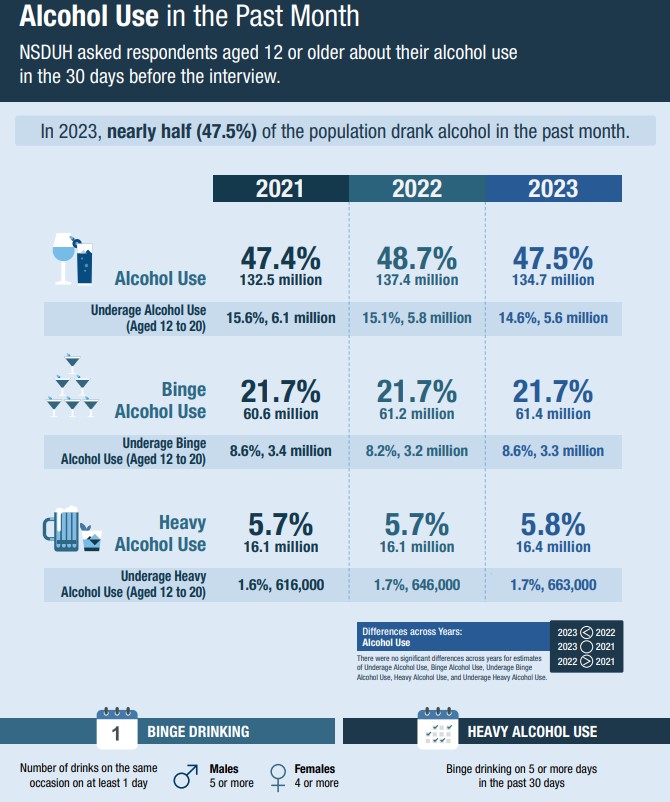
Source- Source- 2023 Companion Infographic Report: Results from the 2021, 2022, and 2023 National Surveys on Drug Use and Health (pg. 5)
For additional statistics, click here and here.
Alcohol use effects on the body
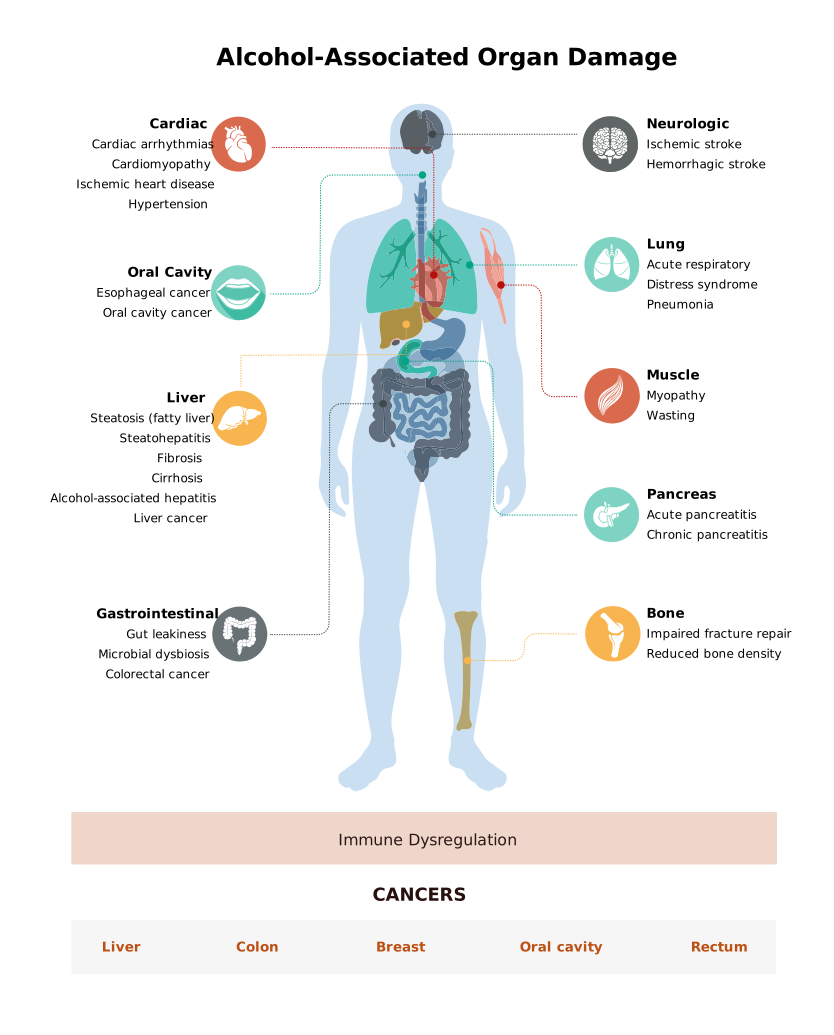
Source- NIAAA
- For more information about alcohol use impact on health, click here.
- For information about alcohol and it’s affect on the brain, click here.
- For information about alcohol and it’s affect on pregnancy, click here.
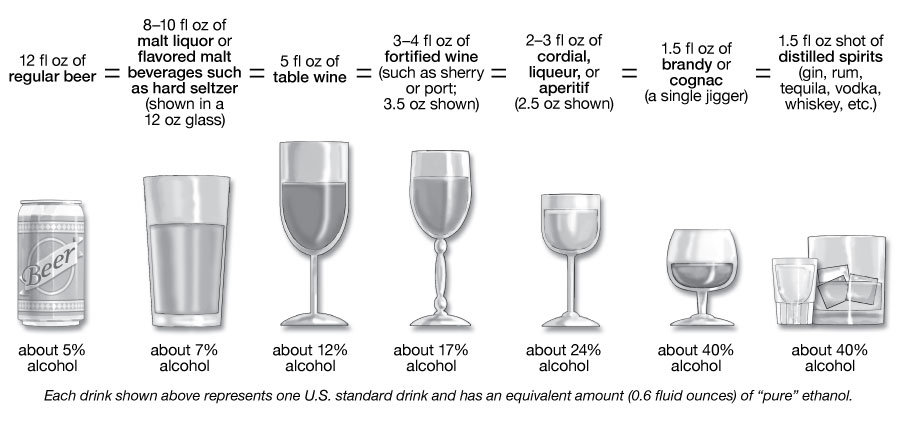
What is a standard drink?
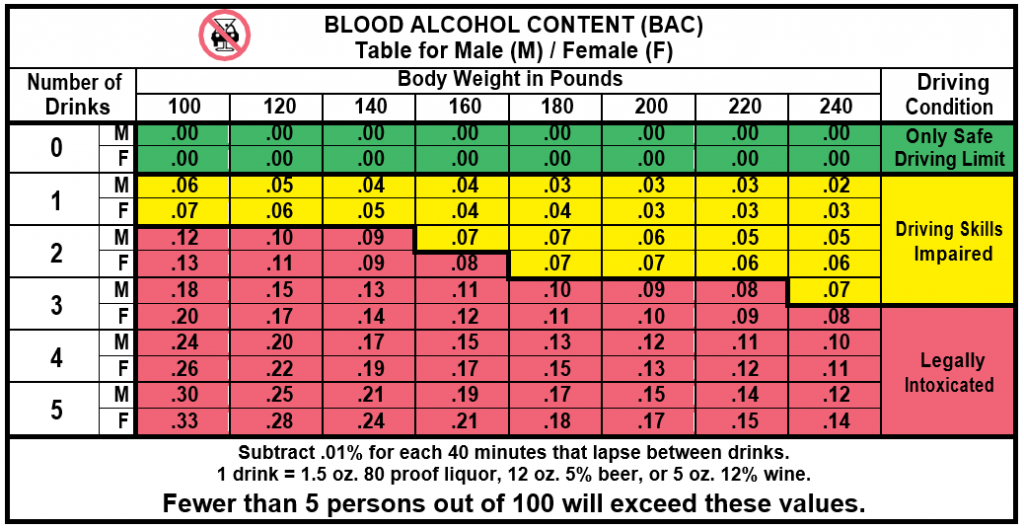
- BAC 0.02 – light to moderate drinkers feel some effects
- BAC 0.08 – definite impairment of muscle coordination and driving skills. Intoxication is legally defined.
- BAC 0.12 – vomiting usually occurs
- BAC 0.40 – most lose conscious and some die
- BAC 0.50 – coma or death occurs
Source- NIAAA
Drinking Patterns


Source- NIAAA
Signs of drinking too much
- You drink more or longer than you intended.
- You try to cut down or stop drinking, but are not able to.
- You need to drink more than you once did, to get the effect you want.
- You continue to drink even though it makes you feel depressed or anxious ― or adds to another health problem.
- Loved ones or trusted friends have made comments about your drinking.
- You spend a lot of time drinking or thinking about alcohol.
- You find that drinking interferes with daily activities, family, friends, or work.
- You have had legal problems due to drinking.
- You have experienced symptoms of withdrawal when you don’t drink (such as shakiness, sweating, tremors, headaches, anxiety, irritability, and/or insomnia).
Source- SAMHSA
Alcohol overdose (aka poisoning)
Symptoms of alcohol overdose
- Mental confusion, difficulty remaining conscious, severe vomiting, seizure.
- Life threatening symptoms include trouble breathing, slow heart rate, clammy skin, dulled responses (i.e. no gag reflex), and extremely low body temperature.
- Alcohol overdose can lead to permanent brain damage or death.
How to respond to an alcohol overdose
- If someone has been drinking and shows ANY of these symptoms, CALL 911!
- Place the person on his/her side with knees bent so they don’t choke on vomit.
- Keep checking on the the person to make sure they are breathing.
- Do not leave the person alone* and stay with them until medical help arrives.
Source- NIAAA
Check your Alcohol Use
- Set a daily and weekly drinking limit.
- Write down your limit and keep it with you.
- Record how much you drink each day.
- Avoid situations and triggers that cause you to drink.
- Ask a friend to help you stay within your limit.
- Talk with a doctor about your alcohol use.
Source- SAMHSA
Prevention tips and support
Parents and caregivers
- Parents talk with your high school grad about celebrating safely; In Spanish, click here.
- Parenting to prevent childhood alcohol use; In Spanish, click here.
- Make a Difference: Talk to Your Child About Alcohol; In Spanish, click here.
- SAMHSA resources- tips for families, parents, and caregivers
- Ask.Listen.Learn– tips for parents having a conversation about alcohol use
- Getting Candid– tips talking to youth about alcohol use. In Spanish, click here.
Community members and agencies
- SAMHSA resources
- CDC resources
- Alcohol interventions for young adults
- Ask.Listen.Learn– tips for teachers having a conversation about alcohol use with students
Treatment for Alcohol Problems: Finding and Getting Help
- National Institute on Alcohol Abuse and Alcoholism; In Spanish, click here.
- NIAAA Facts about teen drinking– support for teens*