


Cannabis/Marijuana
Terms to know
- Cannabis– refers to the dried leaves, flowers, stems, and seeds of the cannabis plant. The plant has many different chemical compounds, which has intoxicating—mind altering—effects. It is also known as marijuana, weed, pot, or bud.
- Tetrahydrocannabinol (THC)- a chemical compound found in the cannabis plant which has intoxicating, mind altering effects. THC can cause changes in mood, thoughts, and perceptions of reality. It is not FDA-approved.
- Cannabidiol (CBD)– a compound found in the cannabis plant that is not intoxicating or mind-altering. Side effects include drowsiness, decreased appetite, vomiting and diarrhea.
- Synthetic cannabinoids- lab-made substances similar to THC but can produce serious negative health effects.
- They are known as Spice or K2, may have a much higher concentration of THC and can be much more powerful.
- Cannabis use disorder– a substance use disorder when a person is unable to stop using cannabis even though it’s causing health and social problems in their lives.
- The strongest predictor of cannabis use disorder is how often someone uses it, and can be mild, moderate, or severe.
- The risk of developing cannabis use disorder is greater in people who start using cannabis during youth or adolescence and who use cannabis more frequently.
- Cannabinoid hyperemesis syndrome (CHS)– occurs when a person has nausea, vomiting, and abdominal pain after long-term, heavy cannabis use.
- It can recur and often requires medical attention.
- CHS only resolves when a person stops using cannabis completely.
Current statistics
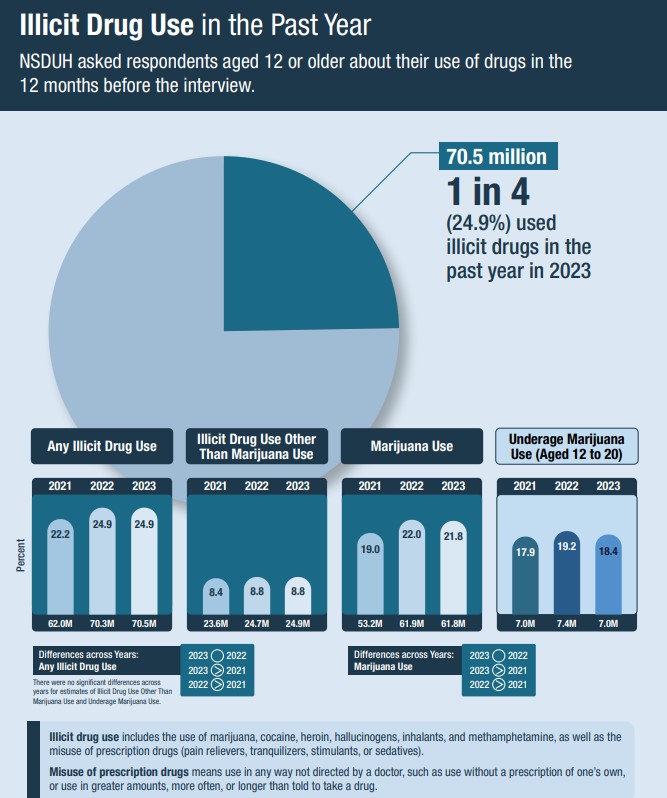
Source- 2023 Companion Infographic Report: Results from the 2021, 2022, and 2023 National Surveys on Drug Use and Health (pg. 6)
Note- Approximately 1 in 10 people who use marijuana will become addicted. When they start before age 18, the rate of addiction rises to 1 in 6. (SAMHSA)
For additional statistics, click here.
Cannabis use effects on the body
Short term effects-
- Intoxication- feel more happy, relaxed, irritable, or restless.
- Causes altered time perception, and impaired thinking, memory, and body movement.
- Can cause anxiety, fear, distrust, panic, or hallucinations (visual and/or auditory)
- Physical side effects- increased appetite, elevated heart rate, elevated blood pressure, respiratory problems.
Long term health effects-
- Harm to lung health- includes large airway inflammation, increased airway resistance, lung hyperinflation, and chronic bronchitis
- Mental health effects- includes problems in cognitive functions (i.e. learning and memory, attention, processing speed, perceptual motor function, and language), earlier onset of psychosis/schizophrenia, and increased risk of depression and suicide
- Cardiovascular effects- increased risk of stroke, heart attack, and arrhythmias.
- Gastrointestinal problems- includes CHS (see above under Terms), acid reflux, pancreatitis, and peptic ulcer disease
- Increased cancer risk- includes head, neck, or throat cancer
Source- NIDA
- For more information about long herm health effects, click here.
- For information about marijuana and pregnancy, click here and here.
- For information about marijuana and the adolescent brain, click here.
- For information about marijuana and driving, click here.
- For information about marijuana an poisoning, click here.
Signs of having cannabis use disorder
- Using more cannabis than intended
- Trying but failing to quit using cannabis
- Spending a lot of time using cannabis
- Craving cannabis
- Using cannabis even though it causes problems at home, school, or work
- Continuing to use cannabis despite social or relationship problems
- Giving up important activities with friends and family in favor of using cannabis
- Using cannabis in high-risk situations, such as while driving a car
- Continuing to use cannabis despite physical or psychological problems
- Needing to use more cannabis to get the same high
- Withdrawal symptoms after stopping cannabis use.
- People who have cannabis use disorder may also be at a higher risk of other negative consequences, such as problems with attention, memory, and learning.
Source- CDC
Signs of withdrawal
Occurs after stopping or significantly decreasing heavy or long-term cannabis use, even if you don’t have cannabis use disorder*.
Withdrawal symptoms may include:
- Anger, irritability, aggression
- Feeling nervous or anxious, restlessness
- Decreased appetite or weight, depression, insomnia
- Experiencing strange or unsettling dreams
- Headaches, sweating, abdominal pain, and tremor
Source- NIDA
Poison prevention of children*
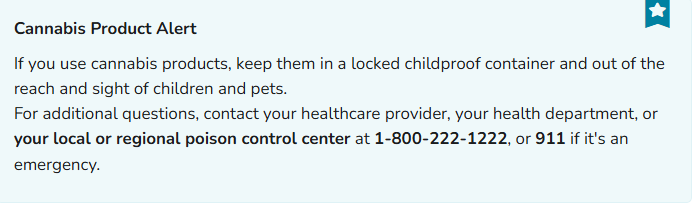
- Marijuana edibles (like gummies, chocolates, candies, baked goods, ice cream, popcorn, sodas) often look like regular treats.
- A child who eats an edible can overdose. This can be mild or severe (needing an Emergency Room or admission to a hospital).
- Severe cases in young children often involve slow or shallow breathing, slow heart rate, and other problems of a slowed central nervous system.
Prevention tips and support
Parents and caregivers
- NIDA resources
- SAMHSA resources- tips for families, parents, and caregivers
- Ask. Listen. Learn– tips for parents having a conversation about cannabis use
- Getting Candid– tip sheet about having conversation with youth about CBD, hemp, and marijuana use. In Spanish- CBD, click here, for marijuana, click here
Community members and agencies
- SAMHSA resources
- CDC resources
- Ask. Listen. Learn– tips for teachers having a conversation about substance use with students