


Sexual Health- Gender, Sexuality, and more…
Gender terminology
- Gender Identity- An individual’s internal sense of self and awareness.
- Gender expression- How a person publicly expresses their gender.
- This can include behaviors, clothes, hair, body language, voice, name, pronouns*.
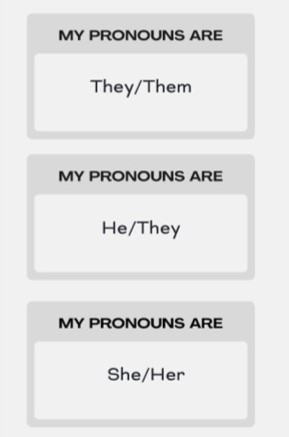
- Pronouns- Words used to narrate an individual’s identity. I.e. He/his, she/her
- Gender neutral pronouns are pronouns that do not position someone within the gender binary. I.e. They/them, he/they, she/they
- Gender attribution- Categorizing someone’s gender and pronouns based on a variety of assumptions. This behavior leads to mis-gendering people.
- Gender affirmation – the process a person may take to bring themselves and/or their
body in alignment with their gender identity

Gender Unicorn in all languages; Source- TSER
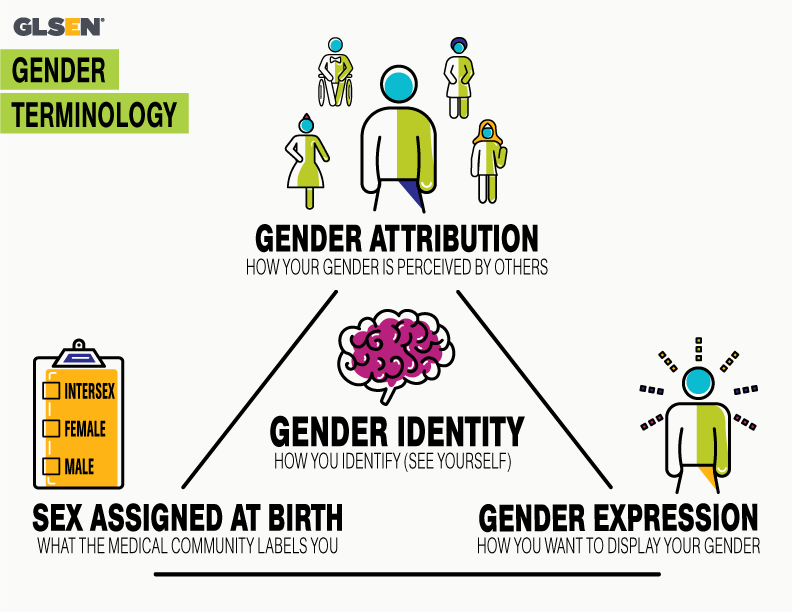
Source- GLSEN
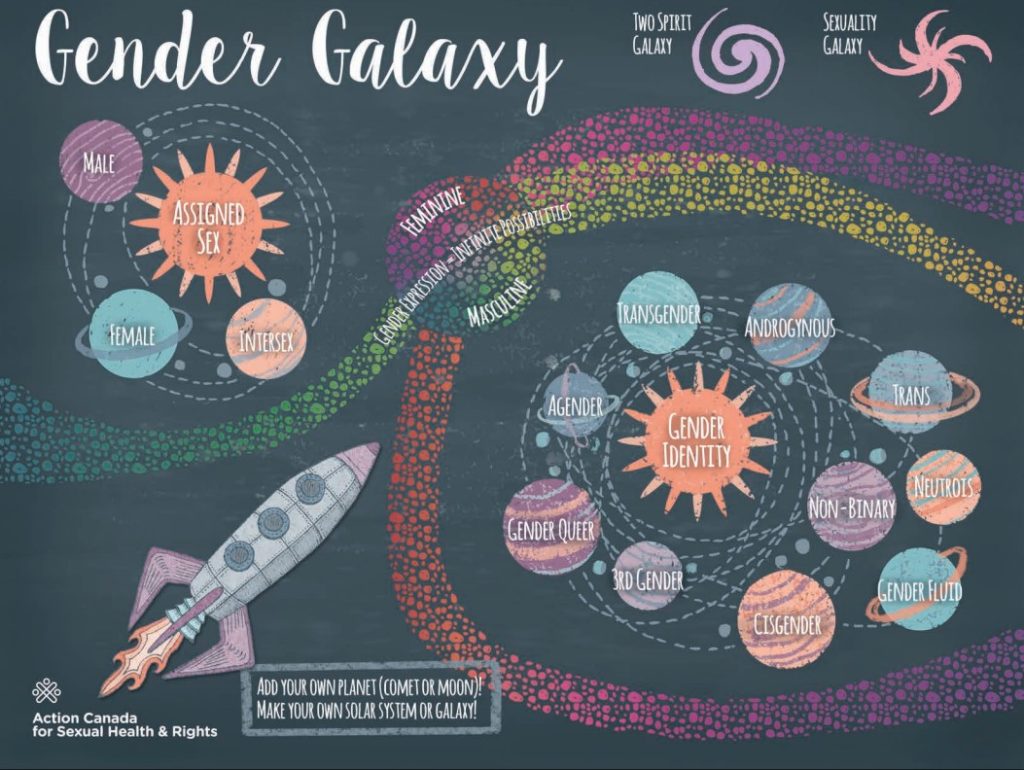
Activity instructions; Source- Action Canada
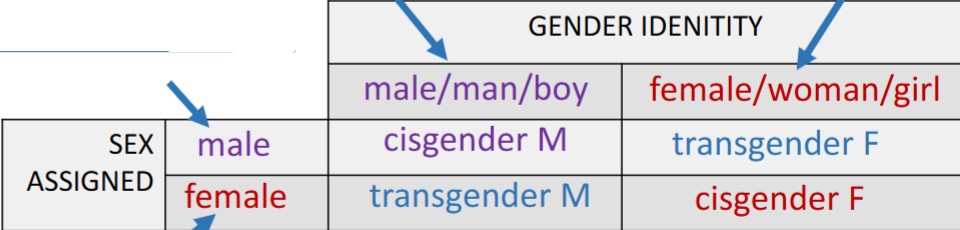
Sex terminology
- Sex Binary- belief that there are only two distinct and opposite sexes- Man and woman
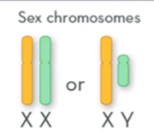
- Sex assigned at birth- based on the appearance of external genitals and chromosomal testing
Categories used for sex assigned at birth:
- Female: vulva, with known or assumed XX sex chromosomes.
- Male: penis, with known or assumed XY sex chromosomes.
- Intersex: When external or internal anatomy that are not all “male” or “female,” and may/may not have variation in sex chromosomes
- It’s up to the individual to decide if the term resonates for him/her/them
- Note- Sex label (M/F/X) does not tell you about the gender of a person.
Sexuality terminology
- Sexual orientation- a person’s sexual, emotional, physical, and psychological attraction to other people. It is completely independent from someone’s gender identity.
- Sexual identity- refers to how one thinks about themselves in terms of emotional, romantic, and/or sexual attraction to other people.
- Sexual behavior- refers to the broad spectrum of activities in how someone expresses their sexuality. It may not align with their sexual orientation or identity.
Different types of sexuality-
- Heterosexual (“hetero”)- Attracted to people of a different gender. Aka “straight.”
- Gay- Attracted to people of the same gender. An umbrella term used in the queer community.
- Lesbian- Attracted to people of the same gender. Most often used for women attracted to women.
- Pansexual (“pan”)- Attracted to people regardless of gender.
- Asexual- Refers to people who generally do not feel sexual attraction or desire to any group of people.
- Bisexual (“bi”)- Attracted to people of the same, different, or multiple genders.
- Queer- Umbrella term to describe different sexual orientations other than “straight.” Can also describe gender identities other than “cis.”
- Questioning- Refers to when a person is exploring their sexuality and/or gender identity.
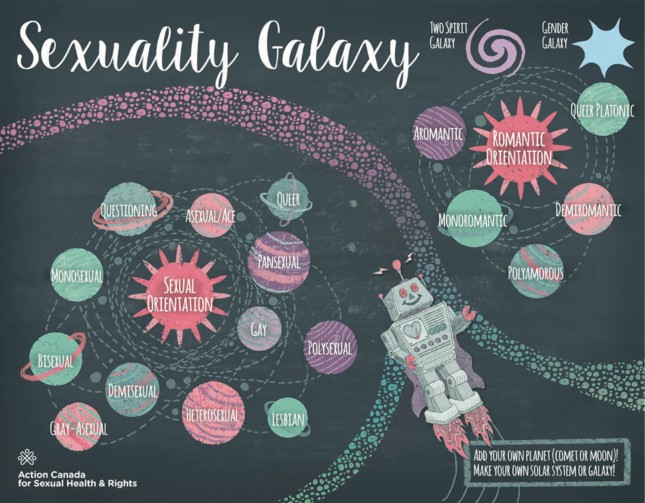
Source- Action Canada
LGBTQ terminology
- LGBTQ: Lesbian, Gay, Bisexual, Transgender, Queer/questioning
- LGBTQIA: Lesbian, Gay, Bisexual, Transgender, Queer/questioning, Intersex, Asexual
- LGBTQIA+: Lesbian, Gay, Bisexual, Transgender, Queer/questioning, Intersex, Asexual. The plus is an acknowledgement that there are many more identities.
- LGBTQIA2SP+: This version makes sure to include two‐ spirit and pansexual folks.

Resources
International and National
- GSLEN and GLAAD– Excellent resources to empower and support the transgender community in schools and the media
- Trans student educational resources (TSER)– Youth-led organization dedicated to transforming the educational environment for trans and gender non-conforming students through advocacy and empowerment.
- The Trevor Project– Provides mental health and community resources for LGBTQ+ individuals
- InterACT- Advocates for intersex youth
- Trans Lifeline- Hotline and support for people in the trans community
- American Academy of Pediatrics- Resources for adolescents, young adults, and parents about LGBTQ+ health and wellness
- National LGBTQIA+ Health Education Center– Learning resources for LGBTQIA+ Health for health professionals, including a glossary of concepts and terminology
Local
- Inside/Out Youth Services- Provides the necessary services our LGBTQIA2+ community needs to thrive in Colorado
- Boulder Valley Health Center- Sexual, gender-affirming, and reproductive care available to teens and adults
Reading material

- You Know, Sex: Bodies, Gender, Puberty, and Other Things by Cory Silverberg and Fiona Smith
- The Every Body Book by Rachel E. Simon
- Trust Kids! by Carla Joy Bergman (editor) and Matt Hern (foreword)