


Depression
Definition & Causes
Depression is a disorder of the brain. It is a serious mental illness that is more than just a feeling of being “down in the dumps” or “blue” for a few days.
Is one of the most common mental disorders in the United States* and can result in severe impairments that interfere with or limit one’s ability to carry out major life activities.
Common causes of depression include genetic, environmental, psychological, and biochemical factors. These factors include family history of depression, experiencing trauma, major life changes, stress, or chronic illnesses, or occurs as a side effect to certain medications.
Types of depression
- Major Depressive Disorder- Refers to being in a consistent dark mood that inhibits daily functions and cause to lose interest in pleasurable activities
- Persistent Depressive Disorder- Refers to when a low mood lasts for two or more years in adults and at least one year in children an adolescents. A person with this disorder may experience episodes of major depressive disorder along with periods of less severe symptoms where they are typically able to function day-to-day.
- Postpartum Depression- Affects women after having a baby. It causes intense, long-lasting feelings of anxiety, sadness, and fatigue, making it difficult for mothers to care for themselves and/or their babies, as well as handle daily responsibilities. Postpartum depression can start anywhere from weeks to months after childbirth.
- Psychotic Depression- A form of depression with psychosis that comes when people get very depressed, such as delusions (false beliefs) and/or hallucinations (hearing or seeing things that are not there).
- Seasonal Affective Disorder is associated with changes in seasons. This form of depression usually occurs during the fall and winter months when there is less sunlight.
- Bipolar Disorder is different than depression, but a person diagnosed with bipolar disorder can experience episodes of major depression.
Source- SAMHSA
Signs and symptoms of depression
- Asterisks indicate behavior occurs in both adults and children
- Anger, irritability, or aggressiveness**
- Feeling anxious, restless, or “on edge”**
- Loss of interest in work, family, school, or pleasurable activities**
- Problems with sexual desire and performance- adult
- Feeling sad, “empty,” flat or hopeless**
- Not being able to concentrate or remember details**
- Feeling very tired, not being able to sleep, or sleeping too much**
- Overeating or not wanting to eat at all**
- Thoughts of suicide or suicide attempts**
- Physical aches or pains, headaches, cramps, or digestive problems**
- Inability to meet work responsibilities, caring for family or other important activities- adult
- Engaging in high-risk activities**
- A need for alcohol or drugs- adults/adolescents
- Withdrawing from family and friends or becoming isolated**
- Feeling worthless, useless, or guilty**
- Showing self-injury and self-destructive behavior- child/adolescents
Source- SAMHSA, NAMI, and ADAA
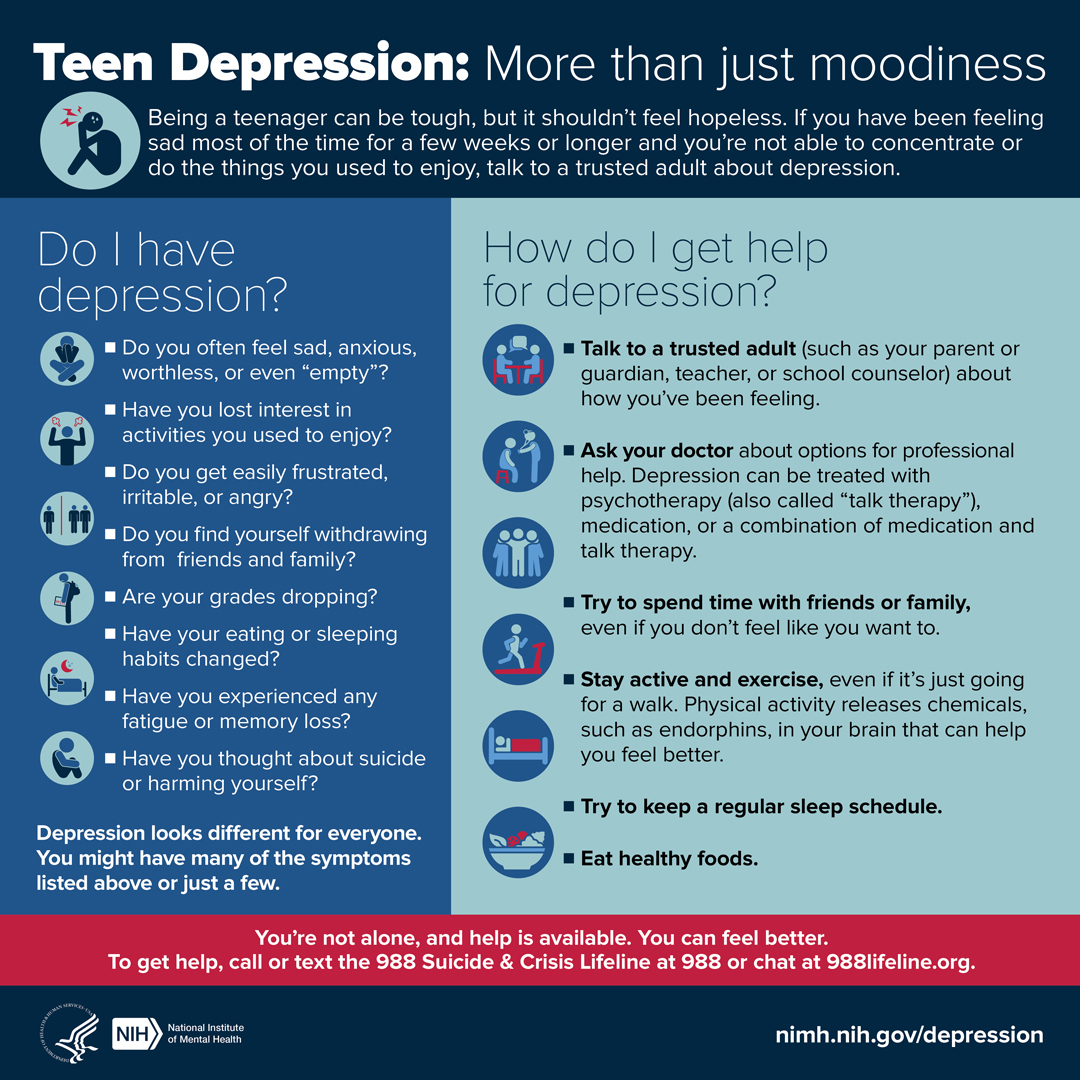
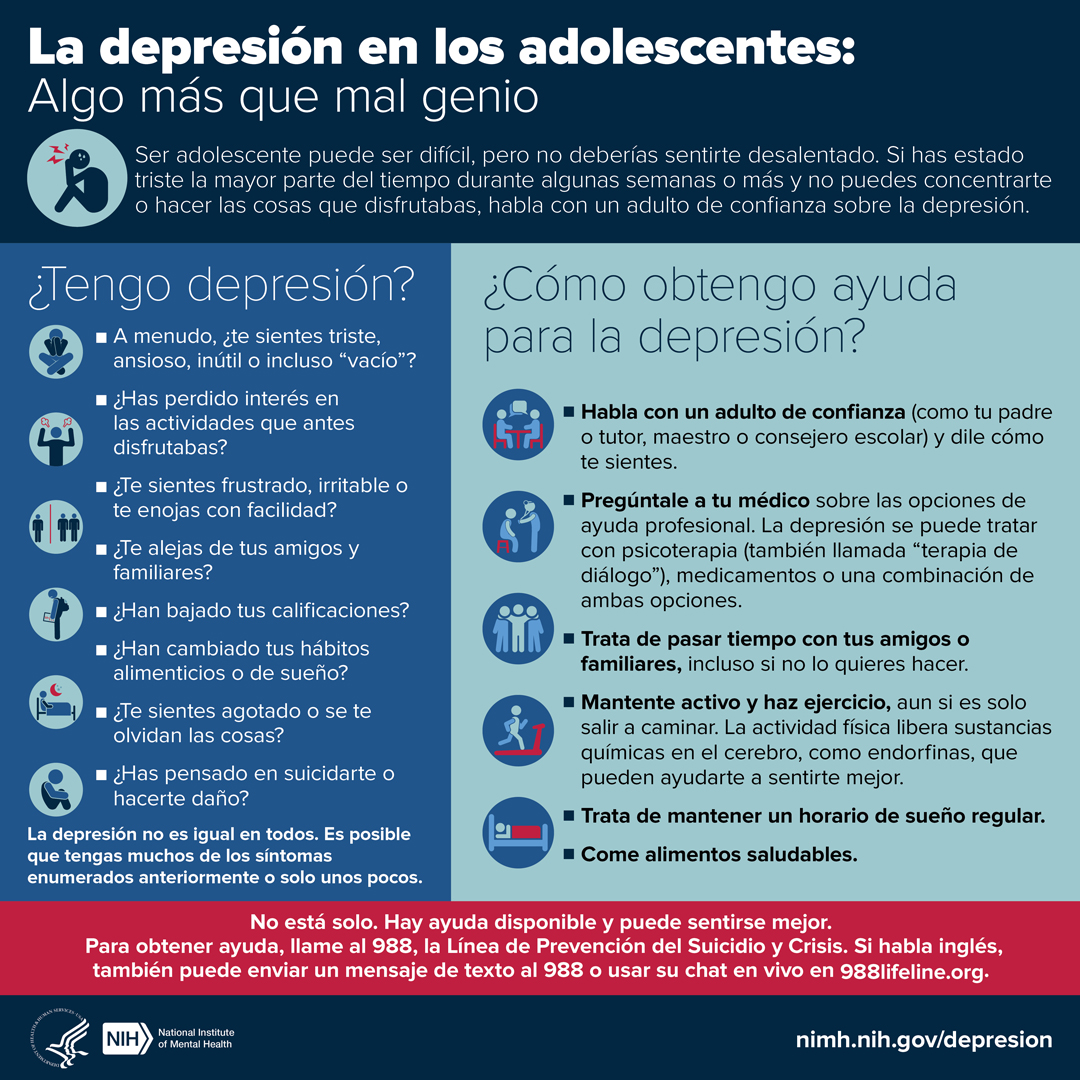
Source- NIHM; Click here for Spanish
Depression prevention and management tips
- Focus on self-care
- Control stress with activities such as meditation or tai chi.
- Eat healthy, exercise, and get enough sleep (7-9 hours/night).
- Avoid using alcohol and recreational drugs
- Set small, achievable goals– Set realistic goals to build confidence and motivation. Build up to bigger goals as you feel better.
- Know the warning signs- Recognize your depression triggers and talk to your doctor and/or mental health professional if you notice unusual changes in how you feel, think, or act.
- Write down how you feel day-to-day (moods, feelings, reactions) to spot patterns and understand your depression triggers.
- Educate family and friends about major depression- They can help you notice warning signs that your depression may be returning.
- Seek support- Whether you find encouragement from family members or a support group, maintaining relationships with others is important.
- Stick to your treatment plan– Even if you feel better, don’t stop going to therapy or taking your medication. Abruptly stopping medication can cause withdrawal symptoms and a return of depression. Work with a doctor to adjust your doses or medication, if needed, to continue a treatment plan
Sources- SAMHSA