


Eating disorders
Definition and causes
Eating disorders are mental health conditions that involve unhealthy behaviors, obsessions, and compulsions around food, exercise, and/or body shape. Eating disorders are not a choice.
They are the most lethal of any mental health conditions and can have serious health consequences, including osteoporosis, gastric rupture, and Type II Diabetes Mellitus.
Eating disorders can affect anyone regardless of body size, race/ethnicity, gender, age, or socioeconomic status.
Many factors contribute to the development of an eating disorder, such as genes, hormones, co-morbid mental disorders (such as depression or anxiety disorders), social attitudes that promote very thin body types, and diet culture.
Source- SAMHSA
Most common types of eating disorders
- Anorexia: Anorexia involves restricting food intake, significant weight loss, intense fear of weight gain, and a distorted perception of appearance. It’s often accompanied by very specific rules and rituals around food and social isolation. Many people with anorexia see themselves as overweight, even when they are starved or severely malnourished.
- Suicide is a leading cause of death for people diagnosed with anorexia nervosa.*
- Bulimia: Bulimia involves binging and purging. Binging means a person eats an abnormally large amount of food in a short time frame. They feel ashamed and out of control while eating. Binging is followed by purging in the form of vomiting, laxative or drug use, fasting, or over exercise.
- Binge Eating Disorder: Binge eating disorder is diagnosed when a person repeatedly consumes abnormally large amounts of food in short timeframes. It is distinct from overeating in that is causes serious pain and shame and the person feels out of control during binges.
- Avoidant restrictive food intake disorder (ARFID): It is an eating disorder in which a person will avoid or limit the volume, type, and/or variety of foods they consume due to a particular negative sensitivity or fear about food. People with ARFID do not have a distorted body image or extreme fear of gaining weight.
- This disorder most commonly develops during infancy and early childhood. A child with ARFID does not eat enough calories to grow and develop properly, and an adult with ARFID does not eat enough calories to maintain basic body function.
- Anorexia athletica (“Exercise anorexia”): Where a person starts to compulsively exercise at an intensity beyond normal. Individuals that engage in anorexia athletica often use excessive exercising behaviors in order to either compensate for their eating or give themselves “permission” to engage in eating.
People with eating disorders often have additional illnesses such as depression, anxiety, and substance use disorder.
Sources- SAMSHA and Eating disorder HOPE
Potential warning signs of someone with an eating disorder
- Physical symptoms
- Noticeable fluctuations (both up and down) of weight
- The discoloration of teeth as well as the development of cavities, which may result from vomiting
- Stomach cramps and other non-specific gastrointestinal issues such as constipation and acid reflux
- Yellow skin (could be in the context of eating large amounts of carrots)
- Constantly feeling cold; cold, mottled hands
- Dry hair and skin; brittle nails
- Fine hair on one’s body
- Dizziness, particularly when one stands up; fainting; muscle weakness
- Menstrual irregularities, such as missed periods or only experiencing a period when on hormonal contraceptives
- Swelling of one’s feet and salivary glands
- Behavioral and clinical signs and symptoms
- Abnormal laboratory results such as low hormone levels, anemia, low white and red blood cell counts, and low potassium
- Issues with one’s sleep
- Poor wound healing, impaired immunity
- Cuts and/or calluses across the top of finger joints, which could suggest inducing vomiting
- Difficulties concentrating
Sources- NEDA

Common health consequences of eating disorders
- Cardiovascular system- at risk for irregular heart rhythm, heart failure, and death due to inadequate caloric intake and electrolyte imbalance.
- Gastrointestinal system- at risk for gastroparesis (slowed digestion), gastric/esophageal ulcers, gastric/esophageal rupture, constipation, intestinal obstruction (blockage), rupture, or infection, and inflammation of the pancreas and liver due to repeated vomiting, use of laxatives, food restriction and overeating.
- Neurological system- at risk for difficulty falling or staying asleep, difficulty concentrating, numbness and tingling in hands, feet, and other extremities, seizures, muscle cramps, fainting and dizziness due to inadequate caloric and fat intake and electrolyte imbalance.
- Endocrine system- at risk for irregular mensuration, broken bones due to bone loss, decrease sex drive and sexual function, and developing Type 2 diabetes due to inadequate caloric and fat intake.
- Other body systems- Severe, prolonged dehydration can lead to kidney failure.
Sources- NEDA
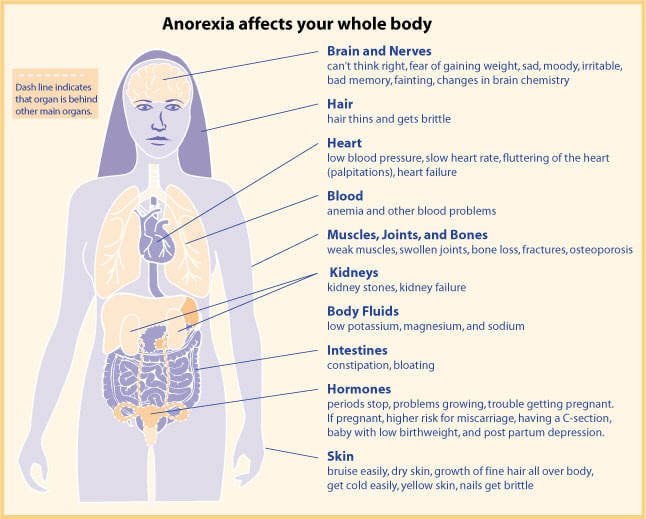
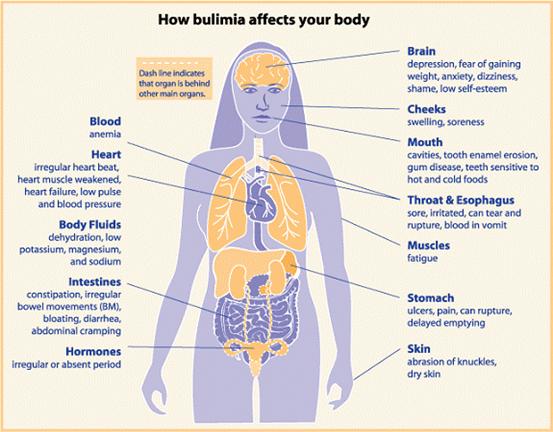
Source- National Women’s Health Information Center (archived)
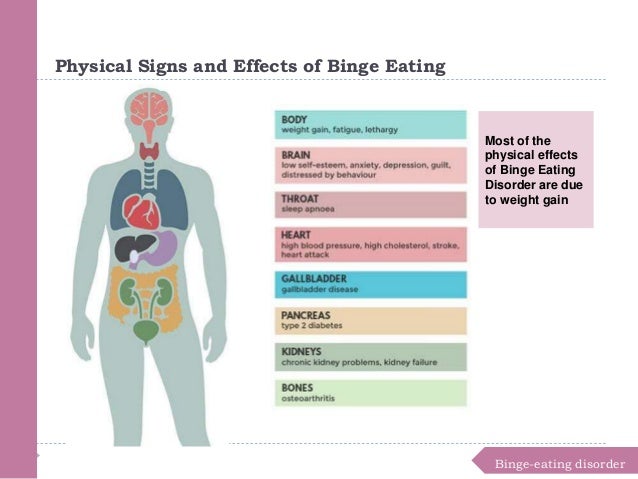
Source- Slideshow
Believe you or a loved one has an eating disorder, take the test…
Mental Health America Eating disorder test
Resources for eating disorders
- Substance Abuse and Mental Health Services Association (SAMHSA)
- National Institute of Mental Health (NIMH)
- National Alliance on Mental Illness (NAMI)
- Anxiety and Depression Association of America (ADAA)
- Mental Health America
- Eating disorder HOPE
- National Eating Disorders Association (NEDA)
- National Association of Anorexia Nervosa and Associated Disorders (ANAD)
- Child Mind Institute– Specific for children and teens