


Sexual Health- Anatomy & Physiology
Understanding Reproductive Anatomy and Physiology
Reproduction refers to the biological process of producing offspring (children).
Sex refers to the external genitalia (i.e. vulva, penis) and secondary sex characteristics (i.e. ovaries, testes) of a person.
Source- The P Conversation
Sex assigned at birth- Male
External anatomy and functions-
- Penis
- External organ made internally of spongy tissue
- Contains the urethra (see below)
- Fills up with blood and becomes erect during sexual arousal
- Glans
- The tip of the penis
- Contains more pleasure sensing nerve endings than any other place on the penis
- The foreskin is a piece of tissue that covers the gland when the penis is soft
- If someone has been circumcised, the foreskin tissue has been removed
- Scrotum
- Holds the testicles
- Lined with pleasure sensitive nerve endings
- Anus
- Opening to the rectum
- Where feces (“poop”) exits the body
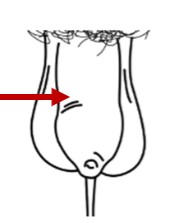
Penis
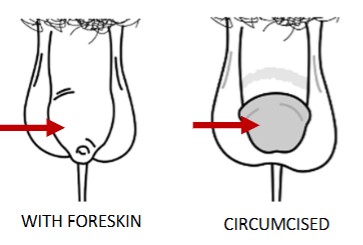
Glans
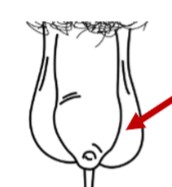
Scrotum
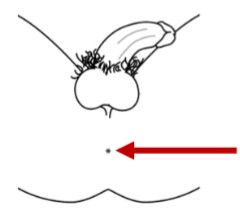
Anus
Source- Adolescent Reproductive Health ECHO program
Internal anatomy and functions-
- Urethra- The tube that allows urine and semen to leave the body
- Testicles- testis (singular), testes (plural); aka. “balls”
- Located inside the scrotum
- Contains reproductive cells (gametes): sperm (which begins with puberty)
- Contains cells that produce the hormone testosterone and estrogen (which begins with puberty)
- Vas Deferens
- A set of tubes that carry sperm from the testicles to the prostate gland that make semen
- A vasectomy is a surgical procedure for birth control. These tubes are blocked so sperm cannot be added to semen at the time of ejaculation
- Prostate Gland
- A gland located between the bladder and the internal parts of the penis, next to the rectum
- Makes some of the fluids contained in semen (semen is also made by the seminal vesicles)
- During ejaculation, a flap in the prostate closes off the bladder, so it is not possible to urinate and ejaculate at the same time
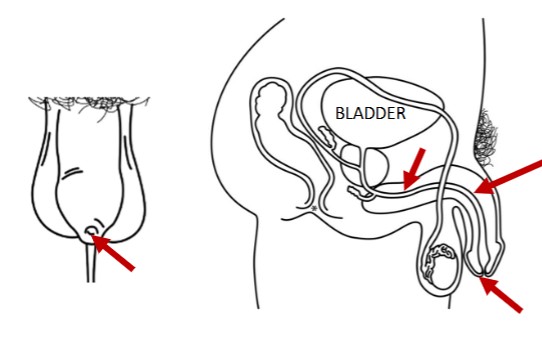
Urethra (external and internal view)
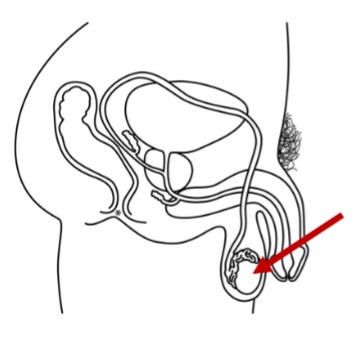
Testicles
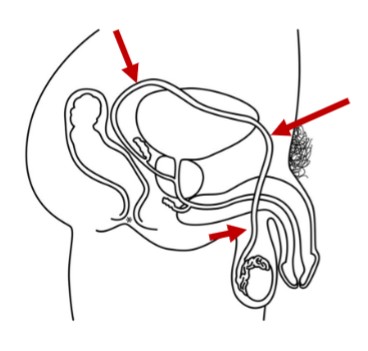
Vans Deferens
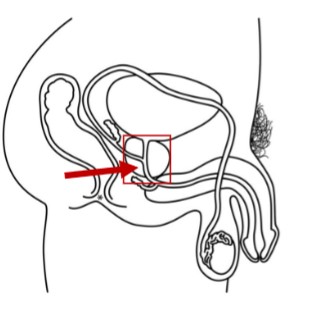
Prostate Gland
Source- Adolescent Reproductive Health ECHO program
Sex assigned at birth- Female
External anatomy and functions
- Vulva- Refers to the external genitals of a person assigned female at birth
- Includes the mons pubis (pubic bone area), inner and outer labia, clitoris, and vaginal opening
- Note: The vagina is an internal structure and is a separate structure of the female genital organ
- Labia- Folds of skin around the vaginal opening
- Outer labia are wider skin folds and grow hair
- Inner labia are thinner skin folds closer to the vaginal opening and meet to form the clitoral hood
- Labia vary in size, shape, and color
- Clitoris- Tip (or glans) at top of the vulva
- Soft, spongy tissue that fills up with blood and becomes erect during sexual arousal
- Contains more pleasure sensing nerve endings than any other part of the vulva
- Urethra- The opening where urine leaves the body and connects to the bladder internally
- Hymen- Tissue that surrounds (does not cover) the vaginal opening
- Under the influence of estrogen, it is stretchy and does not “break” or “pop”
- Can’t tell is someone has had vaginal sex by looking at their hymen*
- Anus- Opening to the rectum
- Where feces (“poop”) exits the body

Vulva
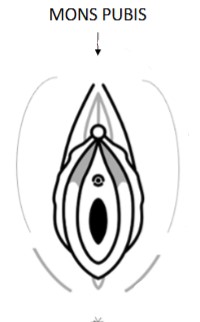
Mons Pubis
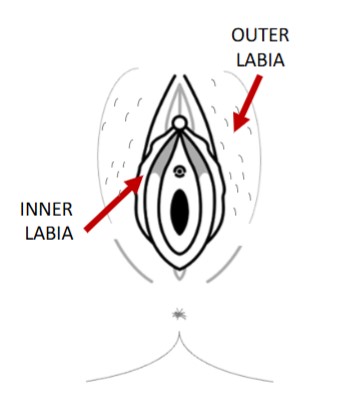
Labia
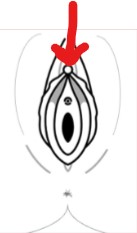
Clitoris
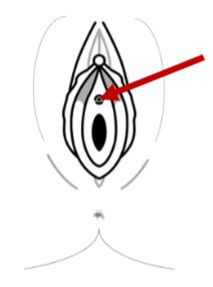
Urethra (external)
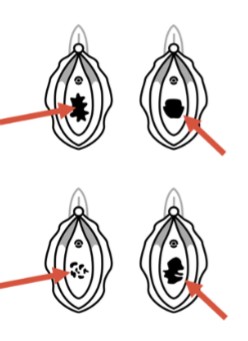
Hymen (different shapes)
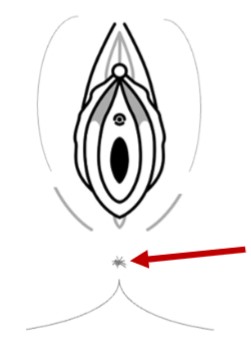
Anus
Source- Adolescent Reproductive Health ECHO program
Internal anatomy and functions-
- Urethra- The opening where urine leaves the body and connects to the bladder internally
- Vagina- A muscular, stretchy pathway that connects the vulva with the cervix and uterus
- Passageway for menstrual fluids, vaginal birth, and vaginal sex
- Also this is where a tampon is inserted to collect menstrual blood
- Cervix- The bottom portion of the uterus
- Site sampled when screening for cervical cancer
- Uterus- A muscular structure that contracts during menstrual bleeding, childbirth, and orgasm
- The place where a fetus grows during pregnancy
- The uterine lining (endometrium) grows thick in response to the hormone estrogen
- The site where a fertilized egg can implant and result in pregnancy
- When it sheds, it results in menstrual bleeding
- Fallopian Tubes- Pathway from the ovaries to the uterus
- Sperm travels through tubes and stays there for 5 days
- If the ovary releases an egg, fimbriated ends sweep it into the tube
- Fertilization (egg and sperm cell joining) occurs in the tube
- When someone has a tubal ligation for birth control, this tube is blocked so sperm cannot reach an egg
- Ovaries– Contains reproductive cells (gametes): egg, ova, oocyte
- Contains cells that produce the hormone estrogen and testosterone which begins at puberty
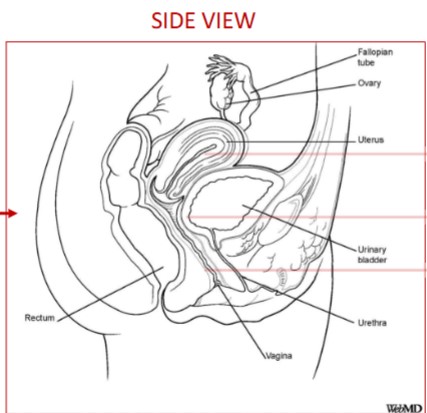
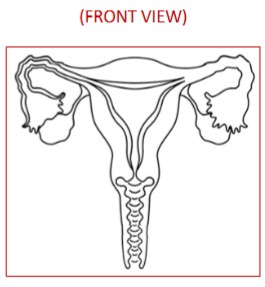
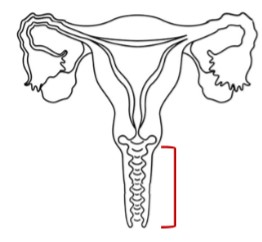
Vagina
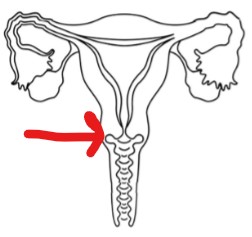
Cervix
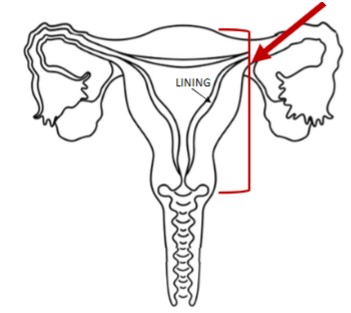
Uterus
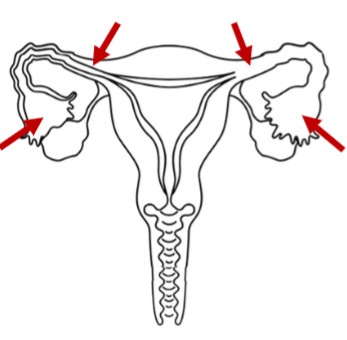
Fallopian tubes
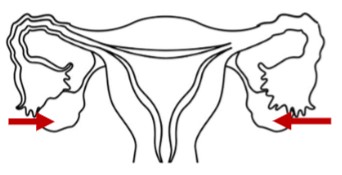
Ovaries
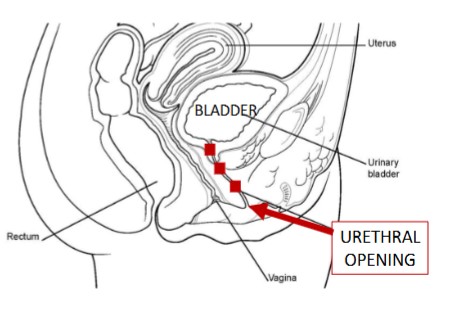
Urethra (internal)
Source- Adolescent Reproductive Health ECHO program
Additional terms to know-
- Semen- The fluid that comes out of the penis at the time of ejaculation. Aka “cum”
- Pre‐ejaculatory fluids- The fluid that comes out of the penis before ejaculation. Aka “pre-cum”
- May contain active sperm*
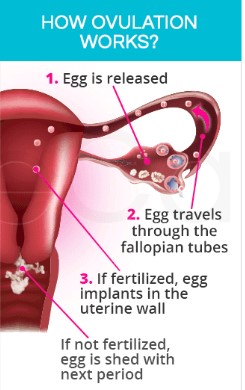
- Ovulation- When an egg cell is released from the ovary
- Typically occurs every 21‐35 days
- If an individual does not get pregnant, they will have menstrual bleeding
- Note- For more information, refer to the Pregnancy tab
- To learn about ovulation symptoms, click here
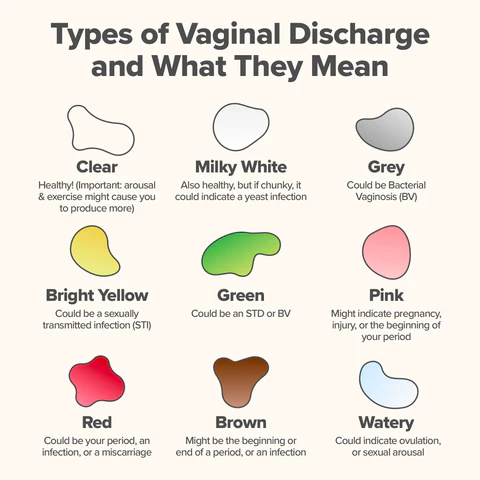
- Vaginal Discharge- Normal and necessary for a healthy adult vagina
- Produced mostly by cervical glands after puberty has started
- Note- Not recommended to wash inside the vagina (douche) because it maintains a healthy environment on its own
- Vaginal Fluids- A natural lubricant; produced when sexually excited due to extra blood flow in the vagina
- Orgasm- A full‐body release of sexual tension that builds up as a result of sexual excitement
- Ejaculation- When semen comes out of an erect penis, or fluids from urethra in people with vulvas
Source- She Cares
Resources
- American Academy of Pediatrics- Resources for adolescents, young adults, and parents about sexual and reproductive health
- Gender Inclusive Biology- Inclusive biology course that can be used in the school setting