


What to do and how to help
What you can do
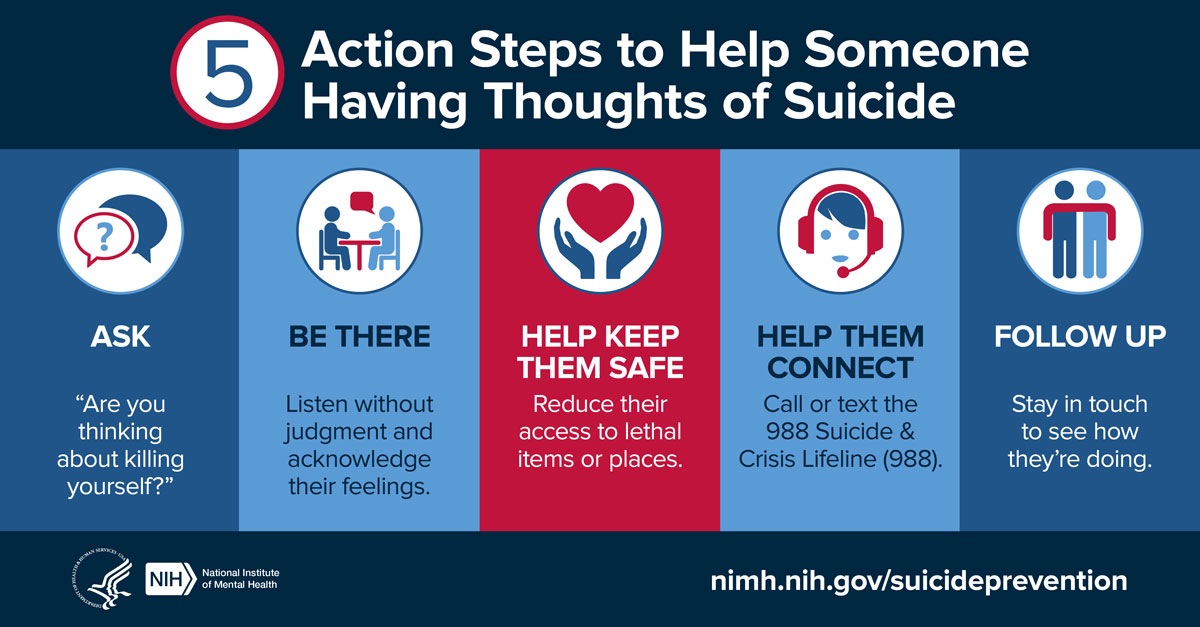
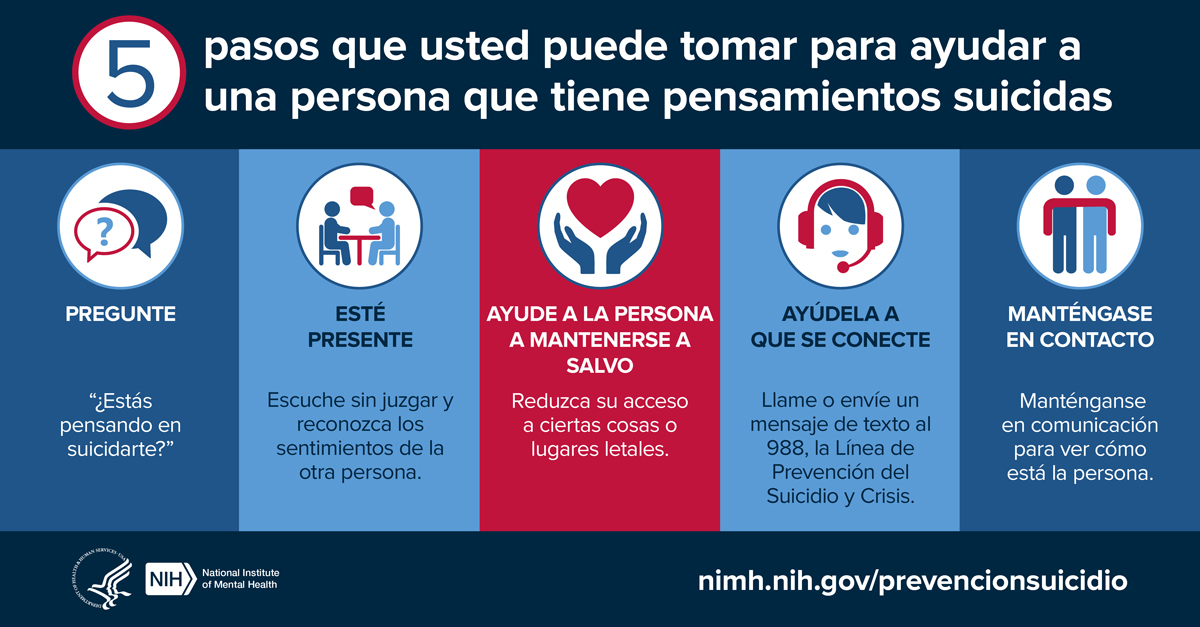
Source- NIMH
Other ways of what to say and how you can help:
- If you know suspect someone who exhibits risk factors for suicide, you can listen and help get them to a competent health professional as soon as possible.
- If necessary, call 911
- Call these organizations to help you through the process-
- National Suicide Prevention line- Call or text 988 or chat 988lifeline.org; For an LGBTQI+ affirming counselor, text “Q” to 988 or by calling 988 and pressing “3.”
- Trevor Lifeline 1-866-488-7386 (call or text)- provide services for LGBTQ+
- Crisis text line- Text HOME to 741741 from anywhere in the United States
- Make sure they do not have access to weapons or guns.*
- Be willing to talk openly and not judgmentally.
- Allow the person to express their feelings and do not offer advice.
- Try to convince they’re wrong, and definitely do not challenge them if they are serious.
- Help the person identify alternatives for dealing with the situation
- It’s more effective to ask direct questions to learn about the person’s thoughts and intentions with the following suggestions:
- “Are you thinking of hurting or killing yourself?”
- “Have you thought about how you’d do it?”
- “Do you have the means to do it?”
- “Have you decided when you will do it?”
- If any of these answer are ‘yes’, then he risk for suicide attempt is high and you should do the following:
- Get professional help for the person immediately.
- Do not leave the person alone, even they promise to get help.
- Don’t say you won’t tell anyone.
- If any of these answer are ‘yes’, then he risk for suicide attempt is high and you should do the following:
- Try to delay them and ask them to agree not to try to hurt or kill themselves until talking with a professional. Delaying is important because many suicide intentions are short-lived.
Additional resources to help
- #Bethe1To– provides guidance of how to help someone who is suicidal by following 5 simple steps