


Suicide Risk & Protective Factors
Risk & Protective Factors
Circumstances that increase suicide risk
Individual
- Previous suicide attempt
- History of depression and other mental illnesses
- Serious illness such as chronic pain
- Criminal/legal problems
- Job/financial problems or loss
- Impulsive or aggressive tendencies
- Substance use
- Current or prior history of adverse childhood experiences
- Sense of hopelessness
- Violence victimization and/or perpetration
Relationships
- Bullying
- Family/loved one’s history of suicide
- Loss of relationships
- High conflict or violent relationships
- Social isolation
Community
- Lack of access to healthcare
- Suicide cluster in the community
- Stress of acculturation
- Community violence
- Historical trauma
- Discrimination
Cultural/Environmental/Societal
- Stigma associated with help-seeking and mental illness
- Easy access to lethal means of suicide among people at risk
- Unsafe media portrayals of suicide
Circumstances that protect against suicide risk
Individual
- Effective coping and problem-solving skills
- Reasons for living (for example, family, friends, pets, etc.)
- Strong sense of cultural identity
Relationship
- Support from partners, friends, and family
- Feeling connected to others
Community
- Feeling connected to school, community, and other social institutions
- Availability of consistent and high quality physical and behavioral healthcare
Cultural/Environmental/Societal
- Reduced access to lethal means of suicide among people at risk
- Cultural, religious, or moral objections to suicide
Source- CDC
Promotion of Mental Health
Tips and resources-
- Coping with stress (CDC)
- Stress busters– website that teaches you ways to combat stress
- Mental health of children and parents — information page
- General mental health information
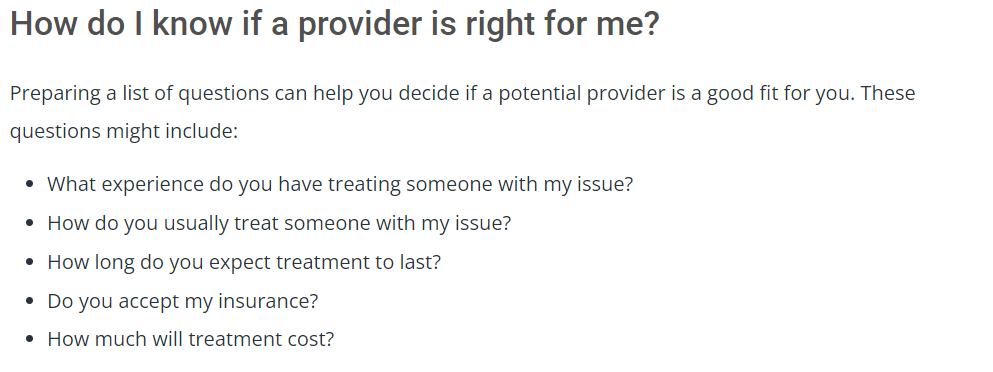
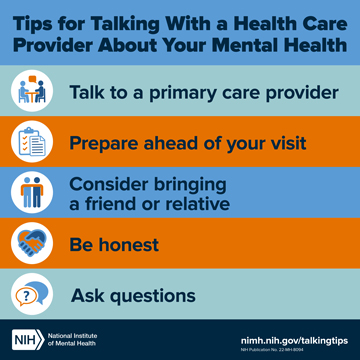
- Tips for talking to a healthcare provider
Tips to when finding a provider
Source- NIMH