


Tobacco and Vaping
Terms to know
- Tobacco– is a plant with leaves that are cured, aged, and processed in various ways to be smoked, chewed, or sniffed.
- Nicotine– active ingredient in tobacco leaves, which is highly addictive. It can also be made in a laboratory (synthetic).
- Nicotine is found in all tobacco products, including cigarettes, vaping solutions, tobacco-free products, and oral nicotine pouches.
- Secondhand smoke– is smoke from burning tobacco products and occurs when people breathe in smoke breathed out by people who smoke from those products.
- Electronic cigarettes– are battery-operated devices that heat a liquid and produce an aerosol. They come in many shapes and sizes, and they typically contain nicotine, flavorings and other chemicals, like cannabis.
- Tobacco use disorder– occurs when your body gets used to having some level of nicotine in your system.
- Over time, your body physical and psychological “depends” on constantly having nicotine.
- It is also known as nicotine dependence.
Current statistics
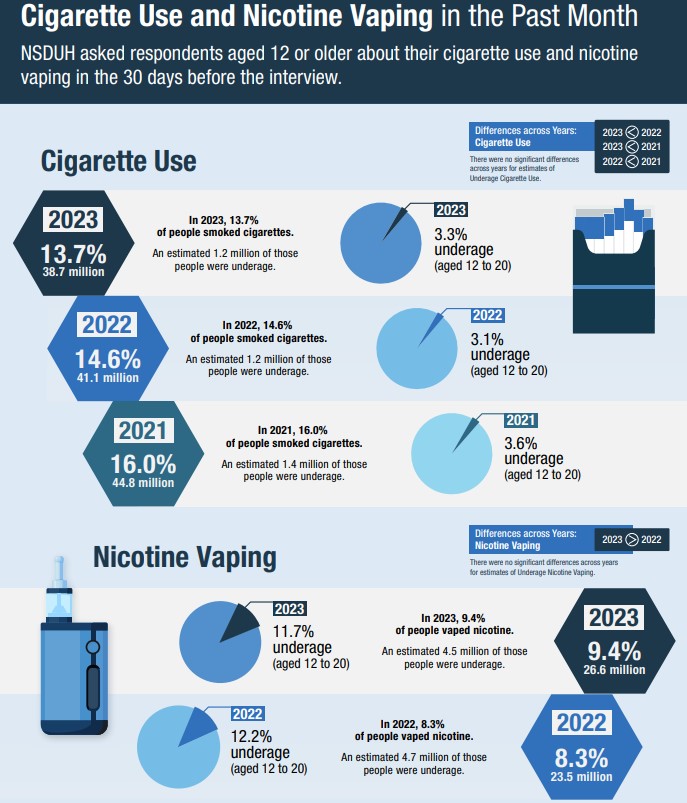
Source- 2023 Companion Infographic Report: Results from the 2021, 2022, and 2023 National Surveys on Drug Use and Health (pg. 4)
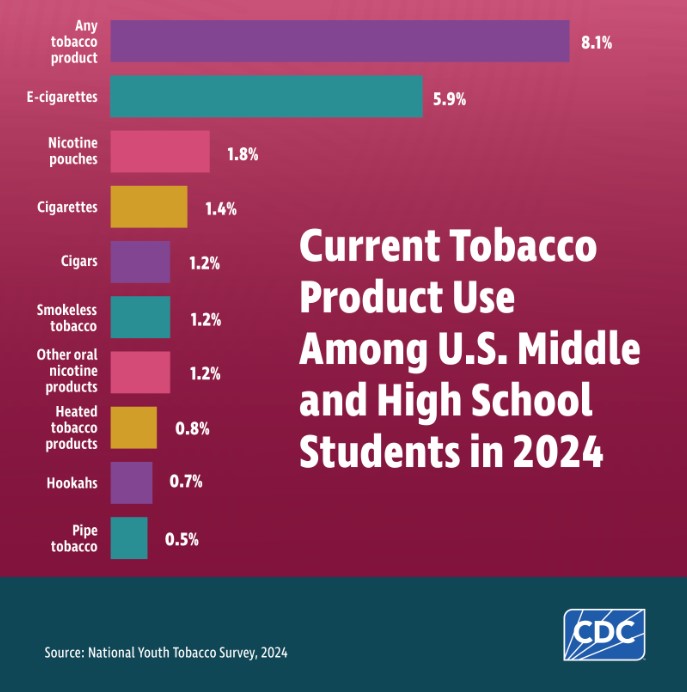
Source- CDC
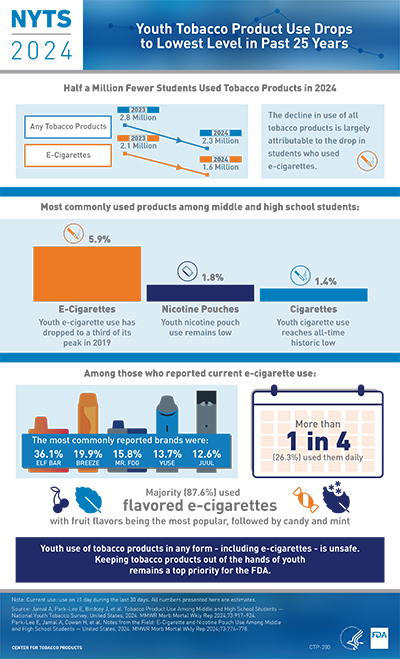
Source- FDA National Youth Tobacco Survey
- For information about current cigarette smoking among adults in the United States, click here.
- For information about economic trends in tobacco, click here.
- For National Tobacco Control Program State Fact Sheets, click here.
- For National Tobacco Control Program State Menthol Fact Sheets, click here.
Nicotine
How does nicotine make people feel?
The effects of nicotine may include:
- A “buzz” caused in part by a release of epinephrine (also known as adrenaline). The rush increases blood pressure, breathing, and heart rate.
- Feelings of pleasure and relaxation.
- Decrease the appetite -Fear of weight gain makes some people unwilling to stop smoking.
- Boost mood, give people a sense of well-being, and possibly even relieve minor depression.
- Increase activity in the intestines.
- Create more saliva and phlegm.
- Increase the heart rate by around 10 to 20 beats per minute.
- Increase blood pressure by 5 to 10 mm Hg.
- Possibly cause sweating, nausea, and diarrhea.
- Stimulate memory and alertness
Health risks of using nicotine:
- Impaired lung function
- Increased risk of oral health problems
- Increased risk of depression and insomnia
- Increased risk of certain cancers
- In teens, nicotine use may cause changes to the development of the parts of the brain that control attention and learning. Other risks include mood disorders, and problems with impulse control.
- Withdrawal symptoms can include craving, depression, anxiety, cognitive and attention deficits, sleep disturbances, feeling irritable, tense, restless, or frustrated, headaches, and increased appetite.
Source- NIDA and Medline Plus
Tobacco
Health risks of using tobacco:
- Increased risk of cancer, especially lung cancer when smoked and oral cancers when chewed.
- Increased risk of lung diseases such as chronic bronchitis and emphysema.
- Increase in asthma symptoms.
- Increased risk of chronic obstructive pulmonary disease (COPD).
- Increased risk of heart disease.
- Increased risk of oral health problems.
- Increased risk of depression and insomnia.
- For teens, same risks as nicotine (see above)
- Withdrawal symptoms are the same as nicotine (see above)
Source- NIDA
Types of tobacco
Cigarette smoking
- Health impacts- Cigarette smoking harms nearly every organ of the body.
- Cigarette smoking causes:
- Cancer
- Heart disease and stroke
- Lung diseases such as chronic obstructive pulmonary disease (COPD)
- Type 2 Diabetes
- Harmful reproductive health effects, especially during pregnancy*
- Other diseases, including certain eye diseases and problems of the immune system, including rheumatoid arthritis.
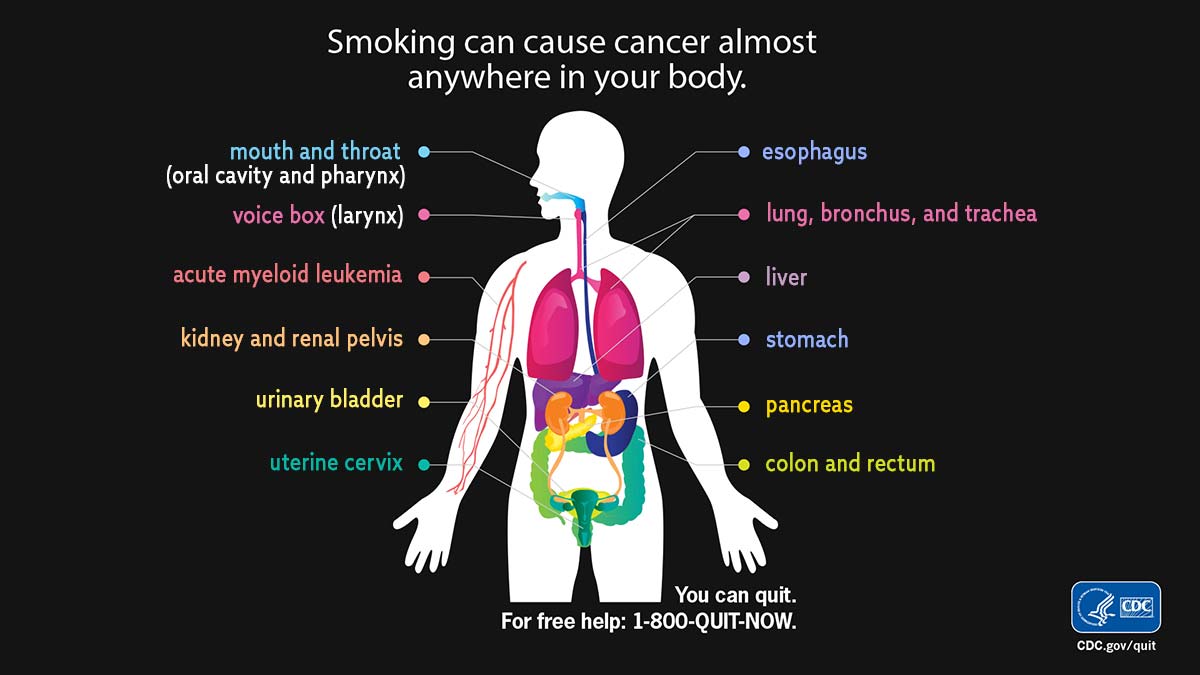
Source- CDC
Electronic cigarettes
- Street names- E-Cigs, Vapes, Vape pens, Tanks, Mods, Pod-Mods, Electric nicotine delivery systems (ENDS)
- The devices may look like traditional tobacco cigarettes, cigars, pipes, or even everyday items like pens or USB memory sticks.
- Health risks of vaping nicotine include:
- An increase in blood pressure, respiration, and heart rate.
- An increased risk of heart health problems.
- Damaged lung tissue that lines the airways and alveoli (small air sacs in the lungs).
- An increased risk of respiratory irritation, fluid in the lungs, low oxygen levels in the lungs, and lung injuries.
- In teens, use of nicotine may cause changes to the development of the parts of the brain that control attention and learning. Other risks include mood disorders, and problems with impulse control.
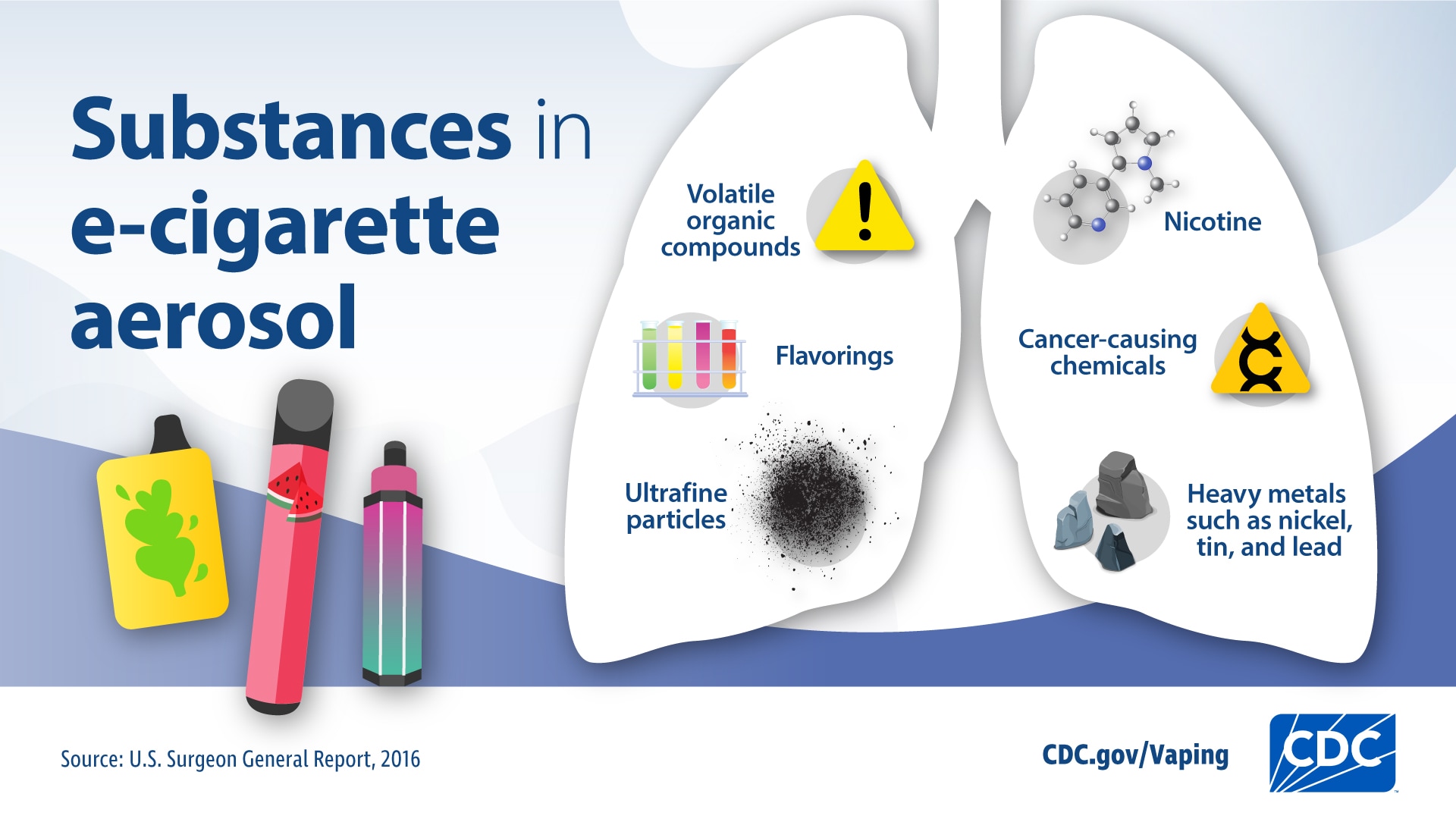
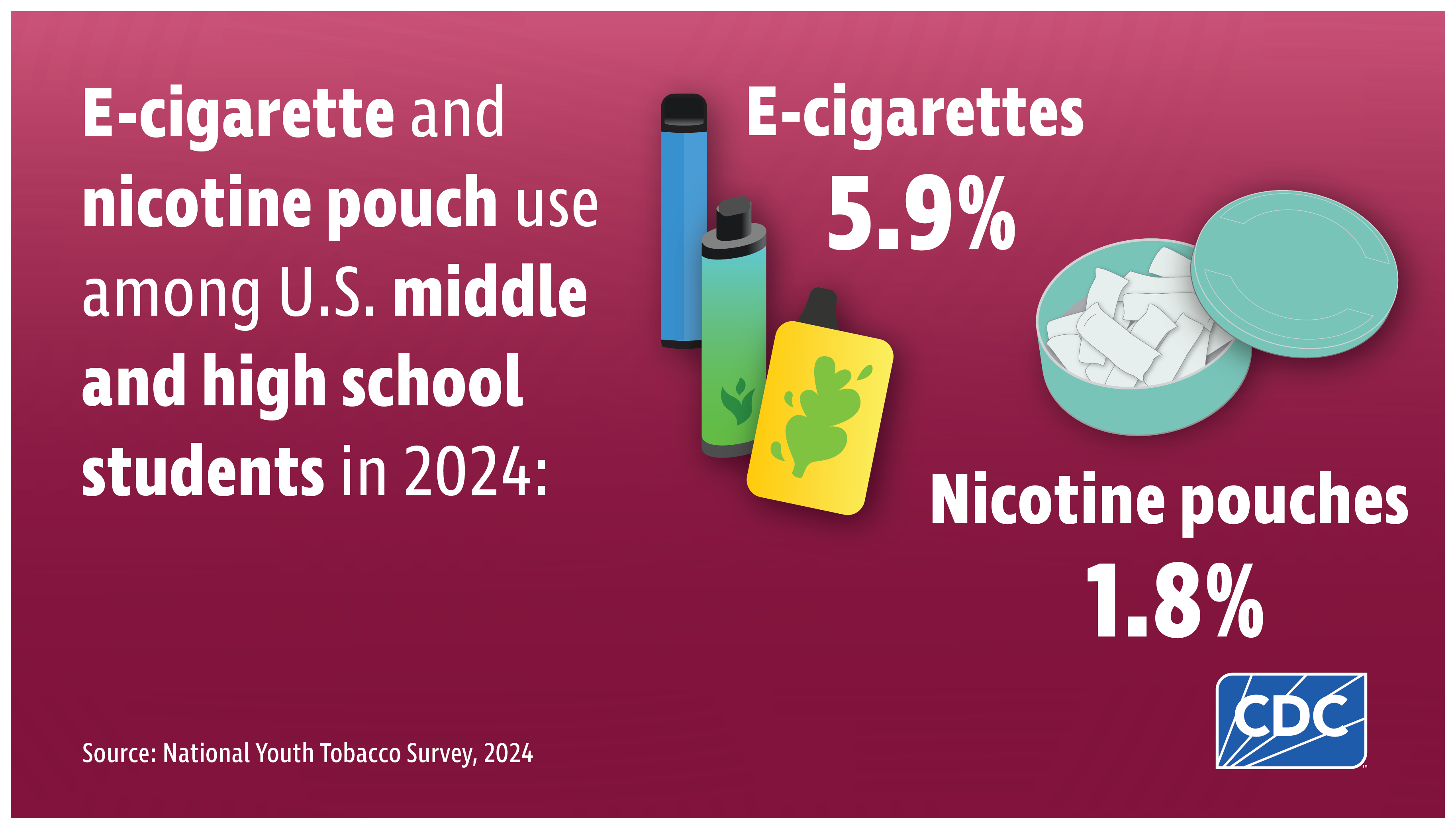
To learn more, click here. To learn why youth vape, click here. For resources in El Paso County, CO, click here.
Other tobacco products
- Menthol Tobacco Products
- Nicotine Pouches
- Heated tobacco products
- Cigars
- Hookahs
- Very Low Nicotine Content Cigarettes
Secondhand smoke
Exposure to secondhand smoke from burning tobacco products causes disease and premature death among people who do not smoke.
Toxins inhaled
Commercial tobacco smoke contains hundreds of harmful chemicals. Here are just a few of the chemicals and toxins in commercial tobacco smoke:
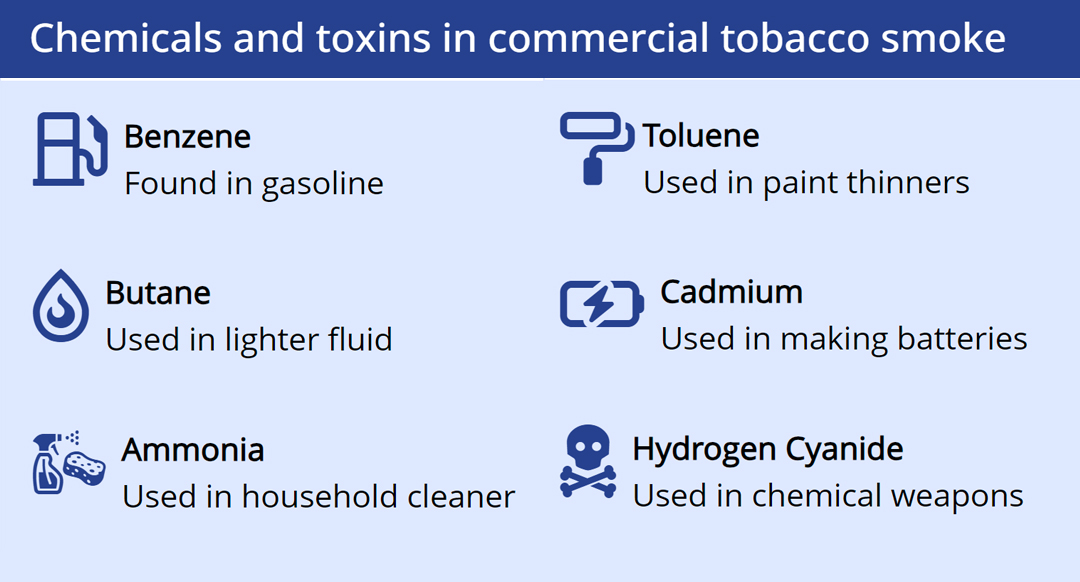
Source- CDC
Health impact on adults and children
- Secondhand smoke can cause coronary heart disease, stroke, and lung cancer in adults who do not smoke
- Children exposed to secondhand smoke are at an increased risk for:
- Sudden infant death syndrome (SIDS)
- Acute respiratory infections, such as pneumonia and bronchitis
- Middle ear disease
- More frequent and severe asthma
- Respiratory symptoms
- Slowed lung growth
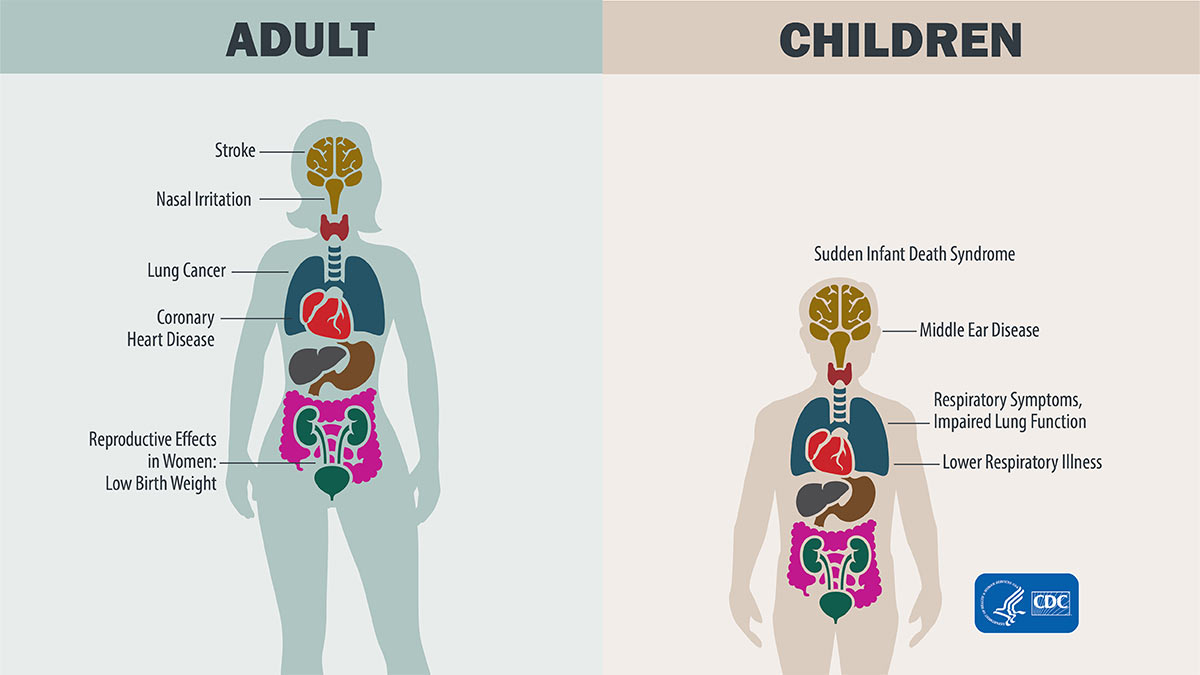
Source- CDC
Secondhand Smoke Resources
- CDC– Resources such as fact sheets, research, reports, and videos about secondhand smoke for individuals, families, and community agencies.
- El Paso County Public Health Department– Colorado Clean Indoor Air Act (CCIAA)
- American Lung Association
- Smoke-Free Housing Directory
Signs of having tobacco use disorder
Symptoms of nicotine dependence can include the following:
- You can’t stop smoking. You’ve made one or more serious attempts to stop without long-term success.
- You smoke within 30 minutes of waking up. The sooner you start smoking after waking and the more cigarettes you smoke during the day, the more dependent on nicotine you are.
- You have nicotine withdrawal symptoms when you try to stop. Your attempts at stopping have caused physical and mood-related symptoms. Withdrawal symptoms can include strong cravings, anxiety, irritable mood, restlessness, trouble focusing or sleeping, depression, frustration, anger, increased hunger, and constipation.
- You keep smoking despite health conditions. Even though you’ve developed health conditions linked to smoking, you haven’t been able to stop.
- You give up social activities. You may stop going to smoke-free restaurants or stop socializing with family or friends because you can’t smoke in these situations.
- Needing larger amounts of nicotine to feel satisfied.
Source- Mayo Clinic, Cleveland Clinic, and Addiction Group
Tobacco prevention
The best way to prevent nicotine dependence is to avoid it. Don’t use any products containing nicotine, including e-cigarettes. Using nicotine just one time can start the process of nicotine dependence.
Tips speaking to youth about using tobacco:
- Helpful Tips for Protecting Youth from the Harms of Vaping
- Talking to your child about smoking
- Talking with Your Teen About Vaping
- Know the Facts: Talk to Youth About Vaping
- Vape: Myth vs. Facts
- Tip Sheet: Talking to Youth
- Campaign for Tobacco Free Kids
- American Lung Association– tips for parents and professionals
- Tobacco Prevention Toolkit
- Getting Candid– in Spanish, click here
Tobacco cessation
When You Quit
- In minutes: Your heart rate drops.
- In 24 hours: Nicotine level in your blood drops to zero.
- In several days: Carbon monoxide in your blood drops to the level of someone who doesn’t smoke.
- Over time, you decrease your risks of heart disease, stroke, and cancer. You increase your ability to support a healthy pregnancy and a healthy baby.
Tips to quit
- Building your quit plan
- Medications (patch, gum, lozenge, inhaler, nasal spray)
- Managing withdrawal and cravings
- Staying smoke free for good
- Helping others quit
- Smokefree text messaging
- Smokefree app
For more information about how to quit, click here.
Source- SAMHSA
Need Help?
I-800-Quit-Now
Telephone
- 1-800-QUIT-NOW
- 1-855-DÉJELO-YA (Español)
- 1-800-838-8917 (中文)
- 1-800-556-5564 (한국어)
- 1-800-778-8440 ((Tiếng Việt)
Smartphone apps and text
- Text QUITNOW to 333888 (Message and data rates may apply.)
- quitSTART app
- This is quitting– app specific for ages 13-24; join for free by texting DITCHVAPE to 88709.
Smartphone apps and text
Smoke-free.gov
- Smoke-free vet
- Smoke-free teen
- Smoke-free Español
Other National cessation resources
- My Life, My Quit*
- CDC
- SAMSHA
- American Lung Association- Quit smoking (for adults) and N-O-T (for teens ages 13-19)
- North American Quitline
- The National Council for Mental Wellbeing
- Resource Digest: E-Cigarette Use and Mental Health Challenges Among Youth and Young Adults
- American Academy of Pediatrics– Nicotine Replacement Therapy and Adolescent Patients
Colorado cessation resources
- Colorado quit line
- My Life My Quit
- Second Chance Tobacco– for teens
- Baby & Me Tobacco Free– for pregnant moms
- Tobacco cessation education and prevention resources– El Paso County only*
- El Paso County Public Health Department
- Colorado Department of Public Health and Environment